


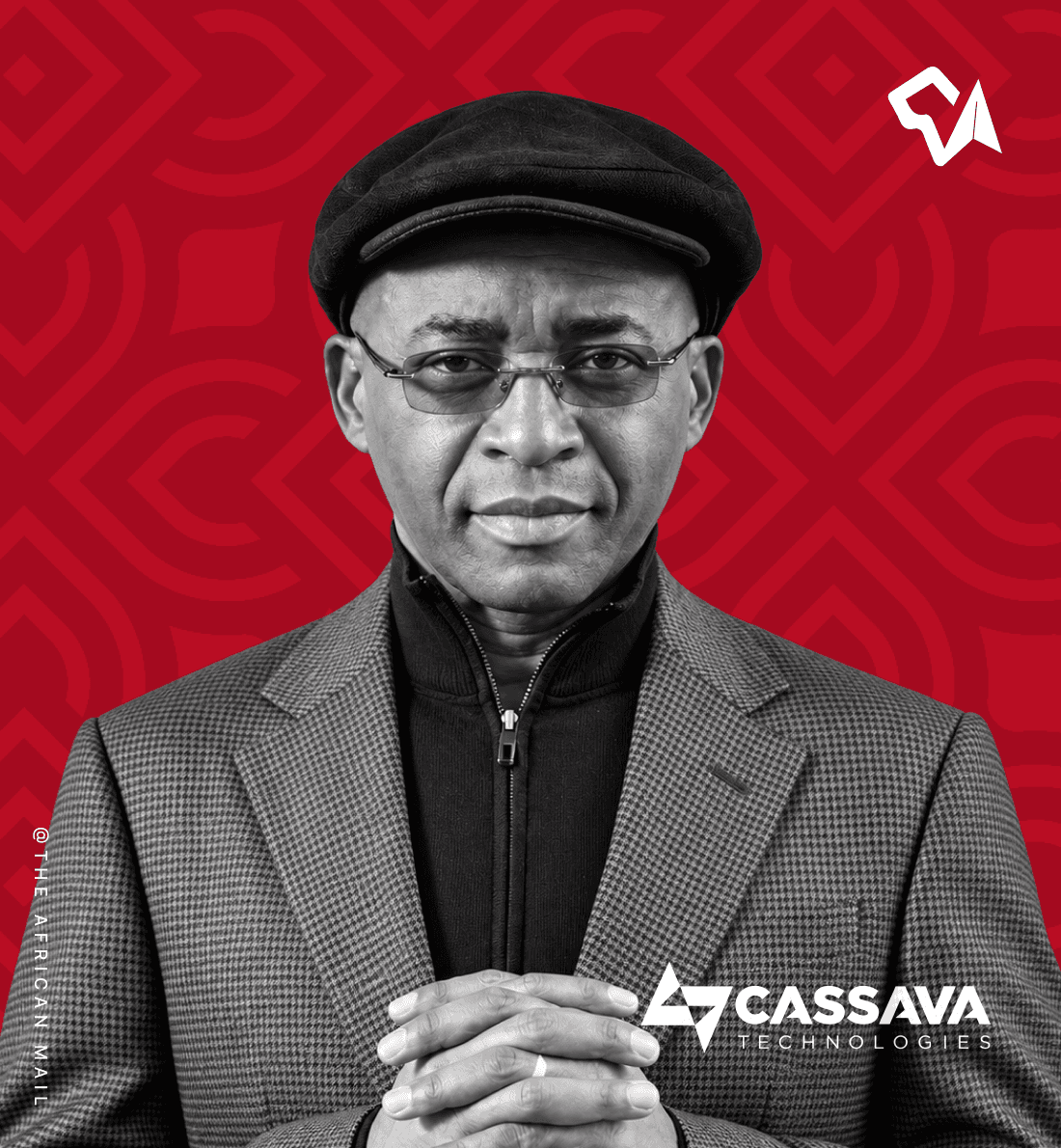
In the mid-1990s, an electrical engineer named Strive Masiyiwa was stripped naked, interrogated and left in a holding cell by Zimbabwean state intelligence operatives. His offense was a relentless campaign for a license to run a cellular telephone network, which directly threatened the state’s telecommunications monopoly. When his captor came back at 9 p.m., returned his clothes and ordered him into a car, Masiyiwa later recalled thinking he was a dead man.
He survived the drive, and the intimidation did not break his resolve. The five-year legal battle that followed against the government of President Robert Mugabe did more than lead to the launch of Econet Wireless in 1998. It changed the course of African telecommunications. Masiyiwa’s victory undermined the assumption that African states should keep monopoly control over communications, and it opened the sector to private capital and set off a digital revolution across the continent.
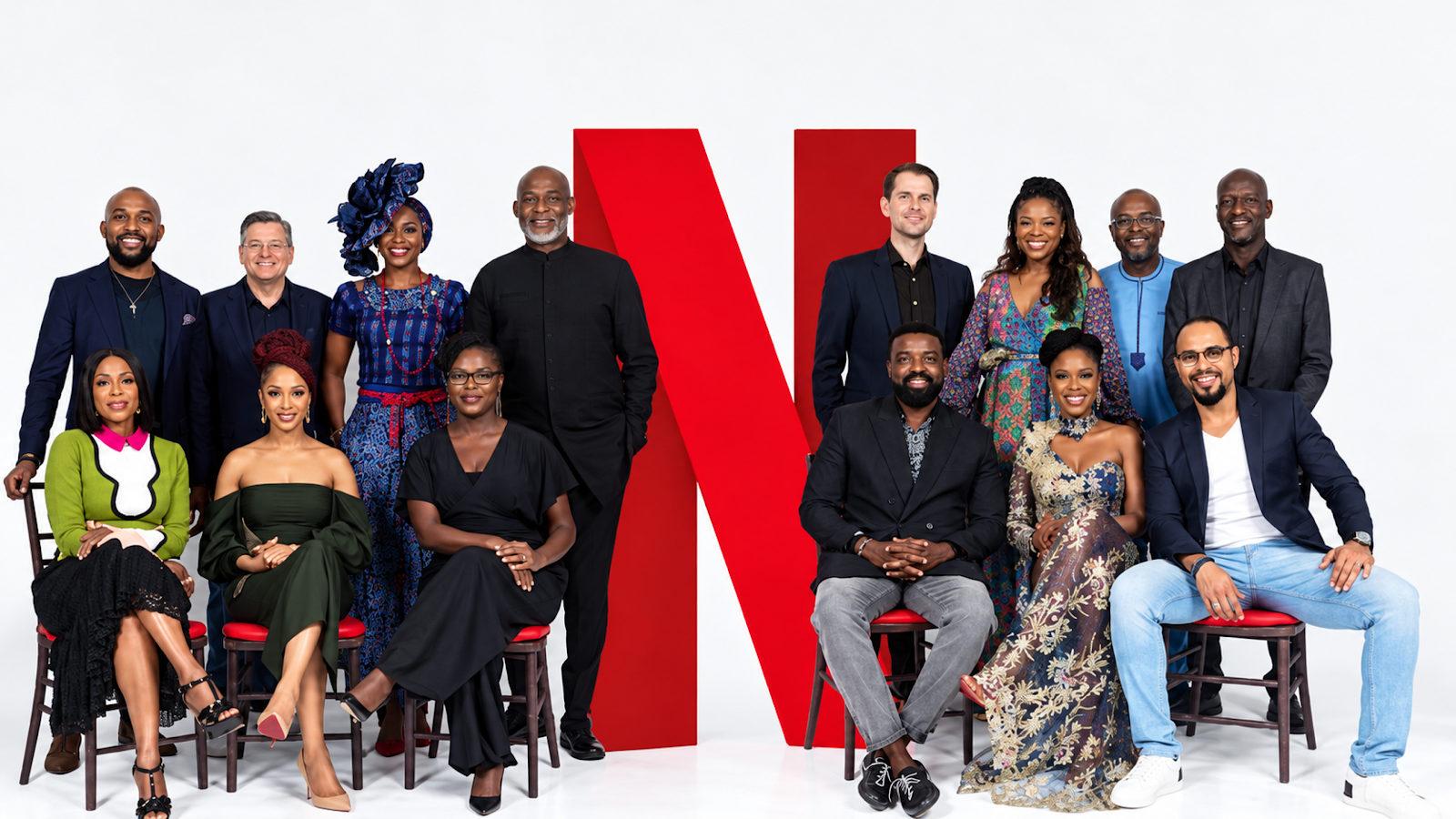
Today Masiyiwa sits at the top of global business and philanthropy, steering a multinational technology group and serving on the boards of Netflix, the Gates Foundation and the National Geographic Society. But describing his story as a standard billionaire’s ascent hides the structural and often dangerous work of building independent institutions in places that are hostile to them. The true measure of his influence is not the wealth he has accumulated. It is the physical infrastructure, the legal precedents and the human capital he has built into the African landscape.
The Making of an Engineer
Masiyiwa was born in Southern Rhodesia in 1961, and his early life was shaped by the political turbulence of a fracturing colonial state. When he was seven, after Prime Minister Ian Smith’s Unilateral Declaration of Independence and the entrenchment of white minority rule, his family fled to Kitwe, a copper-mining city in neighboring Zambia. His parents were resourceful entrepreneurs. His mother ran retail, small-scale farming and transportation businesses, and his father left the mines to join the family enterprise. Their success paid for their twelve-year-old son to attend a private boarding school in Edinburgh, Scotland.
By the time he graduated in 1978, the Rhodesian Bush War was nearing its violent climax. Inspired by the liberation struggle, Masiyiwa went back to Africa intending to join the guerrilla forces led by Robert Mugabe and Joshua Nkomo. A senior officer talked him out of it with a practical argument. The war was nearly won, the officer explained, and the soon-to-be independent nation would badly need educated professionals to rebuild its shattered economy.
He took the advice, returned to the United Kingdom and enrolled at the University of Wales, where he earned a degree in electrical and electronic engineering in 1983. After a short stint in the computer industry in Cambridge, he returned to a newly independent Zimbabwe in 1984. He joined the state-owned Zimbabwe Posts and Telecommunications Corporation (ZPTC) as part of a new wave of black professionals hired on merit rather than political patronage. He rose to principal engineer but ran into an institutional culture steeped in bureaucracy and political cronyism. Frustrated by the inefficiency of the state machinery, he left in 1988 to found Retrofit Engineering, an electrical contracting firm that quickly became highly profitable and earned him the title of Zimbabwe’s Businessman of the Year in 1990.
The Constitutional Breakthrough
By 1993, Masiyiwa could see the global shift toward mobile telephony and approached his former employer with a proposal for a joint venture to launch a cellular network. ZPTC rejected the idea outright, arguing that cell phones were an elite luxury with no real market in Zimbabwe. Undeterred, Masiyiwa decided to build the network on his own. He eventually sold Retrofit Engineering to finance the new venture, Econet Wireless.
The government hit back by declaring that ZPTC held an exclusive monopoly over all telecommunications, which began a grueling legal war of attrition. Masiyiwa’s legal strategy was unorthodox. Rather than arguing commercial or corporate law, his legal team took the dispute to the Supreme Court and framed the monopoly as a direct violation of Section 20 of the Zimbabwean Constitution, which guaranteed freedom of expression. In a landmark 1995 decision, a bench led by Chief Justice Anthony Gubbay agreed, ruling that the state’s monopoly severely restricted the public’s fundamental right to impart and receive information.
The Mugabe administration responded with hostility. In 1996, the government issued a presidential decree criminalizing the operation of private cellular networks, a newly created offense that carried a two-year prison sentence. Masiyiwa went back to court and eventually forced the state to open a public tender. Even then, the license was corruptly awarded to a rival consortium, Telecel, which had close political ties to a sitting cabinet minister. After further litigation, public outrage and the intervention of Vice President Joshua Nkomo, Masiyiwa was finally granted a license.
Econet Wireless launched in July 1998 with 30,000 subscribers who had been eagerly waiting for service. Three months later, the company went public on the Zimbabwe Stock Exchange (ZSE). The offering raised ZD 540 million in a heavily oversubscribed debut, and Econet became the youngest company ever to list on the ZSE. The precedent set by the Econet case reached well beyond Harare. It gave other African countries a judicial blueprint for deregulating state-controlled telecommunications markets.
The Economics of Integrity
In a time and place where graft is often excused as a necessary cost of doing business, Masiyiwa took an absolute stand against corruption, shaped by his devout Christian faith. He has described his philosophy by saying that integrity is a superior form of capital. It can be built up and used like money, he noted, but it goes further and lasts forever.
That rigidity carried heavy commercial and personal costs. In one notable case outside Zimbabwe, a European competitor took over a lucrative $30 million-per-year contract from Econet after Masiyiwa refused demands from powerful politicians for an $8 million bribe. Instead of giving in or walking away quietly, Masiyiwa reported the competitor to the U.S. Justice Department. The competitor was listed on the New York Stock Exchange. The resulting investigation forced the European firm to admit culpability, dismiss its executives and abandon the market, and one of the corrupt politicians involved was eventually sentenced to 13 years in prison.
His commitment to democratic principles also pushed him into exile. In 2000, Masiyiwa made a substantial personal loan to bail out the Daily News, Zimbabwe’s only independent daily newspaper and a frequent critic of the Mugabe government. The state later bombed the paper’s printing presses and systematically shut down its operations. Facing mounting threats to his life, his family and his business, Masiyiwa moved his corporate headquarters to South Africa in 2000 and later relocated his family to London.
Rewiring a Continent
Econet anchored his early success, but Masiyiwa’s most lasting structural impact lies in his aggressive expansion of Africa’s underlying digital infrastructure. He recognized early that mobile networks could not scale without a robust, continent-wide backend, so he built a group of complementary companies, later consolidated under the umbrella of Cassava Technologies.
This infrastructure strategy targeted the continent’s most serious developmental bottlenecks: bandwidth deficits, data sovereignty, energy instability and financial exclusion.
Infrastructure Pillar | Operating Entity | Scale and Strategic Impact |
|---|---|---|
Terrestrial Fiber | Liquid Intelligent Technologies | Built a 110,000+ km independent fiber-optic network across more than 20 countries. Established the first direct East-to-West terrestrial link from Mombasa (Kenya) to Muanda (DRC), significantly reducing latency and reliance on European routing. |
Data Sovereignty | Africa Data Centres (ADC) | Built a network of interconnected, carrier-neutral data facilities across the continent. Operates the 20.65 MW LOS1 facility in Lagos, the largest single critical IT load in Nigeria, ensuring African data stays local. |
Renewable Energy | Deploys commercial hybrid solar and battery storage solutions, including large Tesla Powerwall rollouts, to bypass frequent grid failures and power telecommunications towers and commercial parks across Sub-Saharan Africa. | |
Financial Inclusion | EcoCash & Sasai Fintech | Built mobile money platforms that process billions of dollars in transactions. EcoCash practically functioned as Zimbabwe’s primary transactional medium during severe hyperinflation and cash shortages, while Econet carries an 80% share of the country’s mobile data traffic. |
Liquid Intelligent Technologies proved especially important to the continent’s digital independence. Historically, internet traffic between two African nations often had to be routed through London or Paris because there were so few cross-border terrestrial cables. By trenching fiber across hostile terrain, active conflict zones and fragmented regulatory environments, Liquid enabled direct intra-African connectivity. That engineering feat lowered the cost of broadband and laid the groundwork for the continent’s growing tech hubs.
During Zimbabwe’s catastrophic hyperinflation in the late 2000s, when monthly inflation peaked at 79.6 billion percent, Econet’s mobile money platform, EcoCash, helped keep the retail economy running. By digitizing transactions when physical currency had become worthless or simply unavailable, the platform acted as a stand-in financial system, absorbing the shock of macroeconomic collapse for millions of citizens and keeping commerce moving. The World Bank’s digital economy diagnostic for Zimbabwe gives wider context.
A Redefined Philanthropy
As his corporate footprint grew, so did his capacity for civic action. In 1996, at the height of the devastating HIV/AIDS epidemic in Zimbabwe, Masiyiwa and his wife, Tsitsi, established the Capernaum Trust to support the growing number of children orphaned by the crisis.

The Trust grew into the Higherlife Foundation, an institution that applies rigorous corporate analytics to social development. Rather than treating philanthropy as simple charity, Higherlife operates as a structured investment in human capital. To date, the foundation has provided supported more than 400,000 learners across Africa with scholarships covering educational costs from early childhood development through to doctoral fellowships.
The foundation’s impact is organized around specific needs:
Scholarship Initiative | Target Demographic | Strategic Purpose |
|---|---|---|
Capernaum Scholarship | Orphaned and vulnerable children (OVC) | Launched during the HIV/AIDS crisis, providing basic education, holistic care and stability to those without family support systems. |
Joshua Nkomo Scholarship | Academically gifted Zimbabwean youth | Merit-based funding aimed at developing national leadership, channeling students into top-tier global universities such as Oxford and Morehouse College. More on the foundation’s education work. |
High-performing students in Lesotho | Focused on advancing science, engineering and technology (STEM) education, while requiring community engagement from recipients. See also the Lesotho program page. |
In 2014, Strive and Tsitsi Masiyiwa signed the Giving Pledge, committing to give away at least half of their wealth to philanthropic causes during their lifetimes. They were among the first African billionaires to join the initiative launched by Bill Gates and Warren Buffett, and they have cited their faith as a driving reason for redistributing wealth.
Global Influence and Crisis Management
Masiyiwa’s influence often reaches beyond corporate boardrooms into global governance and crisis management. During the Ebola outbreak in West Africa between 2014 and 2015, the African Union asked for his help, the first time it had called on a business leader to coordinate a public health response. Masiyiwa mobilized the private sector to fund the deployment of medical workers and resources.
When the COVID-19 pandemic set off a global scramble for resources in 2020, the African Union again appointed him as a Special Envoy. He recognized that fragmented African nations could not compete with wealthy Western countries when bidding for ventilators, therapeutics and vaccines, so he built the Africa Medical Supplies Platform (AMSP). The digital platform pooled the procurement power of 55 member states and secured hundreds of millions of doses of the Johnson & Johnson vaccine along with essential medical equipment, changing the continent’s pandemic trajectory and saving countless lives.
Legacy and Wider Significance
Masiyiwa’s place at the highest levels of global corporate governance, including seats on the boards of Netflix and the Gates Foundation and, earlier, Unilever, signals an important shift in how African commercial expertise is valued in the global north. In May 2026 Princeton University awarded him an honorary doctorate. As co-chair of the Pathways for Prosperity Commission at Oxford University, alongside Melinda French Gates, he has consistently pushed for policies that ensure technological disruption benefits the developing world rather than deepening existing inequalities.
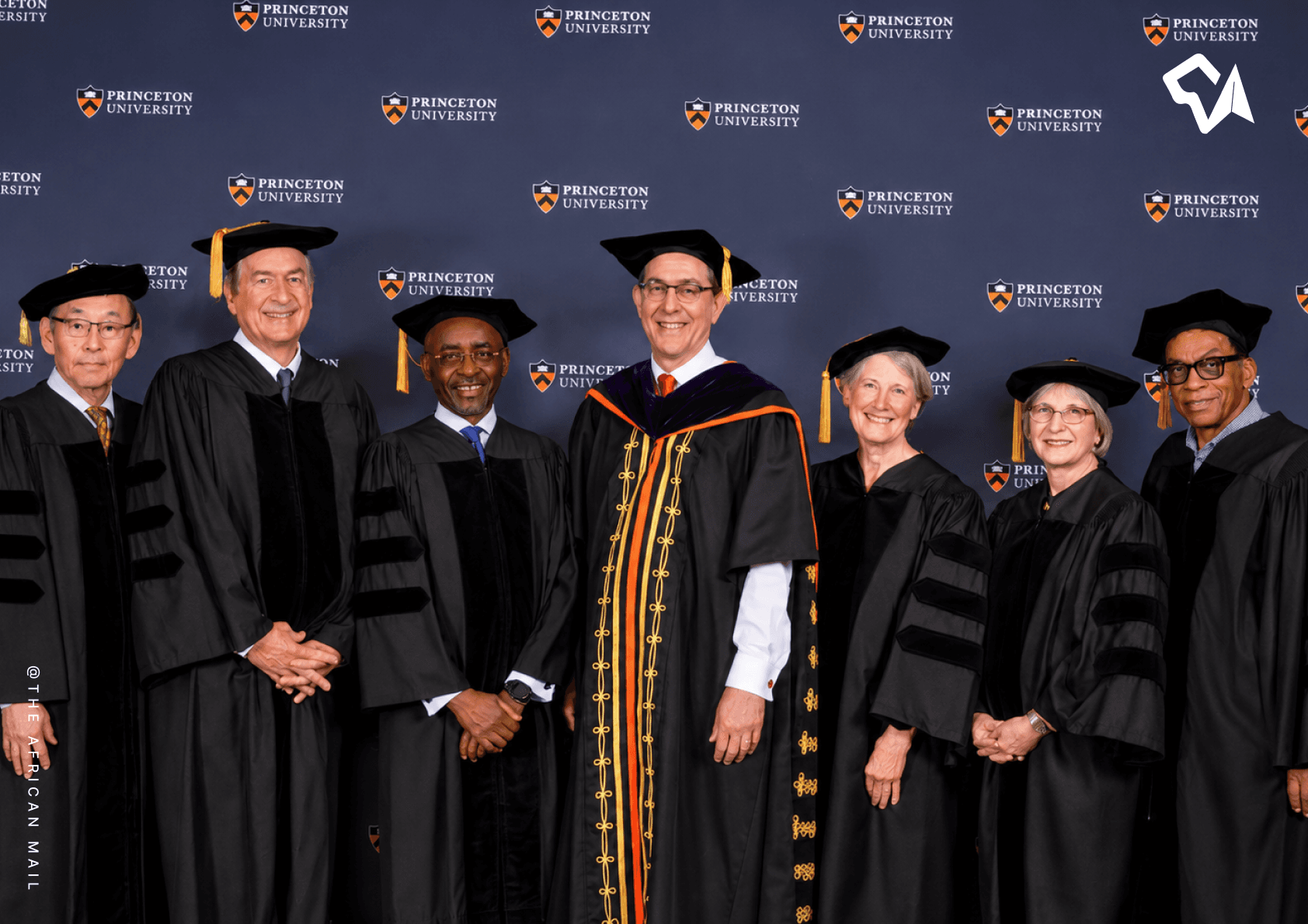
Masiyiwa with fellow honorary graduates at Princeton University’s 2026 Commencement, where he received a Doctor of Humane Letters.
His career offers a clear counter-narrative to the afro-pessimism that dominated international economic discourse in the late 20th century. Masiyiwa showed that African enterprises could innovate at the frontier of technology, scale across borders and keep high governance standards, even when the political and regulatory environment around them worked against them.
The legacy Strive Masiyiwa is building is not simply one of personal wealth or corporate dominance. By trenching fiber across savannas, financing data centers in megacities and educating hundreds of thousands of orphans, he has built both the physical and intellectual infrastructure Africa needs to take part in the global digital economy on its own terms. He fought a government for the right to connect a nation, and in doing so he helped wire a continent for the future.






Comments
No comments yet. Be the first to share your thoughts.