

On November 1, 2024, a brief audio clip circulated across the African continent, signaling the end of an era. "From tomorrow... I will start the process of handover," said Mokgweetsi Masisi, the incumbent president of Botswana. With those words, the Botswana Democratic Party (BDP), the political monolith that had governed the diamond-rich nation continuously since its independence from Britain in 1966, conceded a landslide defeat.
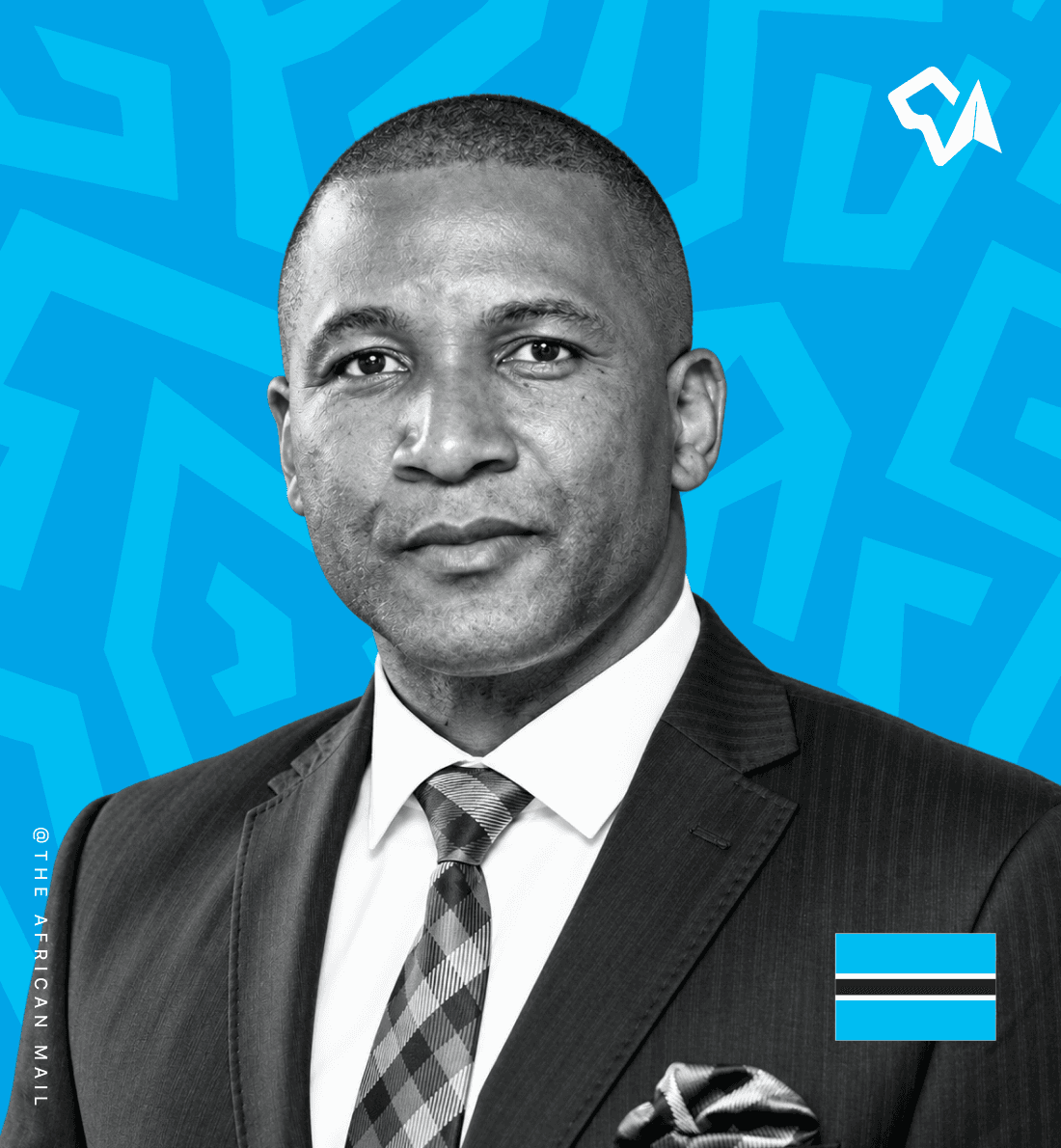
The architect of this historic upset was Duma Gideon Boko, a 54-year-old human rights lawyer and leader of the Umbrella for Democratic Change (UDC) coalition. By securing an absolute majority in the National Assembly, Boko’s victory shattered the illusion of the BDP's invincibility. In a region where liberation-era ruling parties often cling to power through constitutional manipulation or force, the peaceful unseating of a 58-year-old government sent ripples from Gaborone to Abuja, providing a blueprint for democratic resilience in Africa.
However, Boko inherited a country in deep economic distress. Botswana’s celebrated model of exceptionalism, built on the steady revenue of rough diamonds, was faltering. The global diamond market had slumped, youth unemployment hovered around 38 percent, and the national treasury was heavily depleted. The story of Duma Boko is not merely about a politician winning an election; it is the narrative of a sophisticated legal mind who recognized a shifting demographic tide, harnessed a nation's mounting economic anxieties, and forced a systemic reckoning.
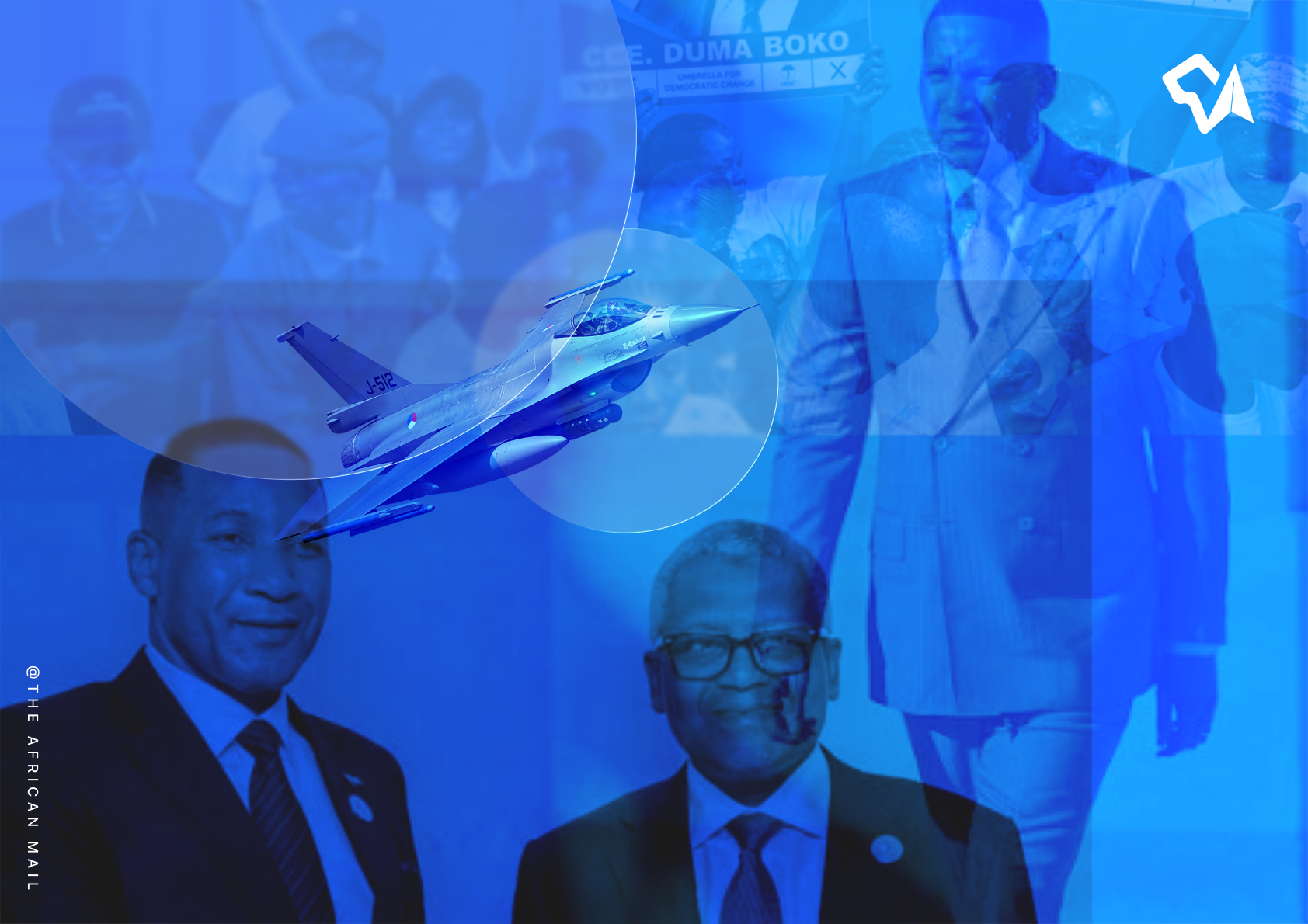
Forged in the Academy and the Courtroom
Born on December 31, 1969, in Mahalapye, a village in Botswana’s Central District, Boko was exposed early to the intersection of education and civic duty. His father, who passed away in 2004, was a lecturer at the Madiba Brigades, instilling an academic rigor that would define Boko's early trajectory.
Boko read law at the University of Botswana (UB) in 1987, where he entered student politics on the Student Representative Council alongside classmates who would later become prominent High Court judges. After graduating in 1993, he attended Harvard Law School, earning a Master of Laws (LLM) degree in 1995 before returning to Gaborone.
For a decade, Boko straddled the worlds of academia and legal practice. As a constitutional law lecturer at UB, he developed a reputation as a fierce, sometimes polarizing intellect. His early academic writings reveal a man deeply concerned with the structural inequities of Botswana's dual legal system. In a seminal 2000 paper on customary courts, he critically analyzed the high conviction rates and lack of legal representation for the rural poor, arguing that the system inherently disadvantaged marginalized citizens.
In 2008, he formalized his transition from academia to full-time advocacy by opening his own firm, Duma Boko & Co, focusing on human rights, labor, and public interest litigation. His defining legal battle emerged during the long-standing conflict between the Botswana government and the indigenous Basarwa (San) people of the Central Kalahari Game Reserve (CKGR). The government had systematically relocated the Basarwa, arguing the move was necessary for conservation, while simultaneously cutting off basic services. Boko stepped into the fray as part of the legal team representing Roy Sesana and over 200 Basarwa applicants. In a 2006 landmark High Court ruling, the evictions were deemed unconstitutional.
His willingness to confront the state apparatus was tested further in 2009 during the case of John Kalafatis, a citizen executed in broad daylight by members of a military intelligence unit. Amid widespread public fear of the Directorate on Intelligence and Security Services (DIS) under then-President Ian Khama, Boko boldly took up the Kalafatis family's case. He demanded sworn statements from the President and initiated private prosecutions against security agents, alleging a coordinated, state-sanctioned assassination. While the broader legal system struggled to hold the highest echelons accountable, Boko’s actions cemented his image as a fearless operator willing to challenge the security establishment.
The Brutal Calculus of Coalition Politics
Boko’s transition from courtroom advocate to political strategist began in 2010 when he assumed the presidency of the Botswana National Front (BNF). Recognizing that a fractured opposition could never overcome the BDP's constituency-based electoral advantage, Boko engineered the creation of the Umbrella for Democratic Change (UDC) in 2012.
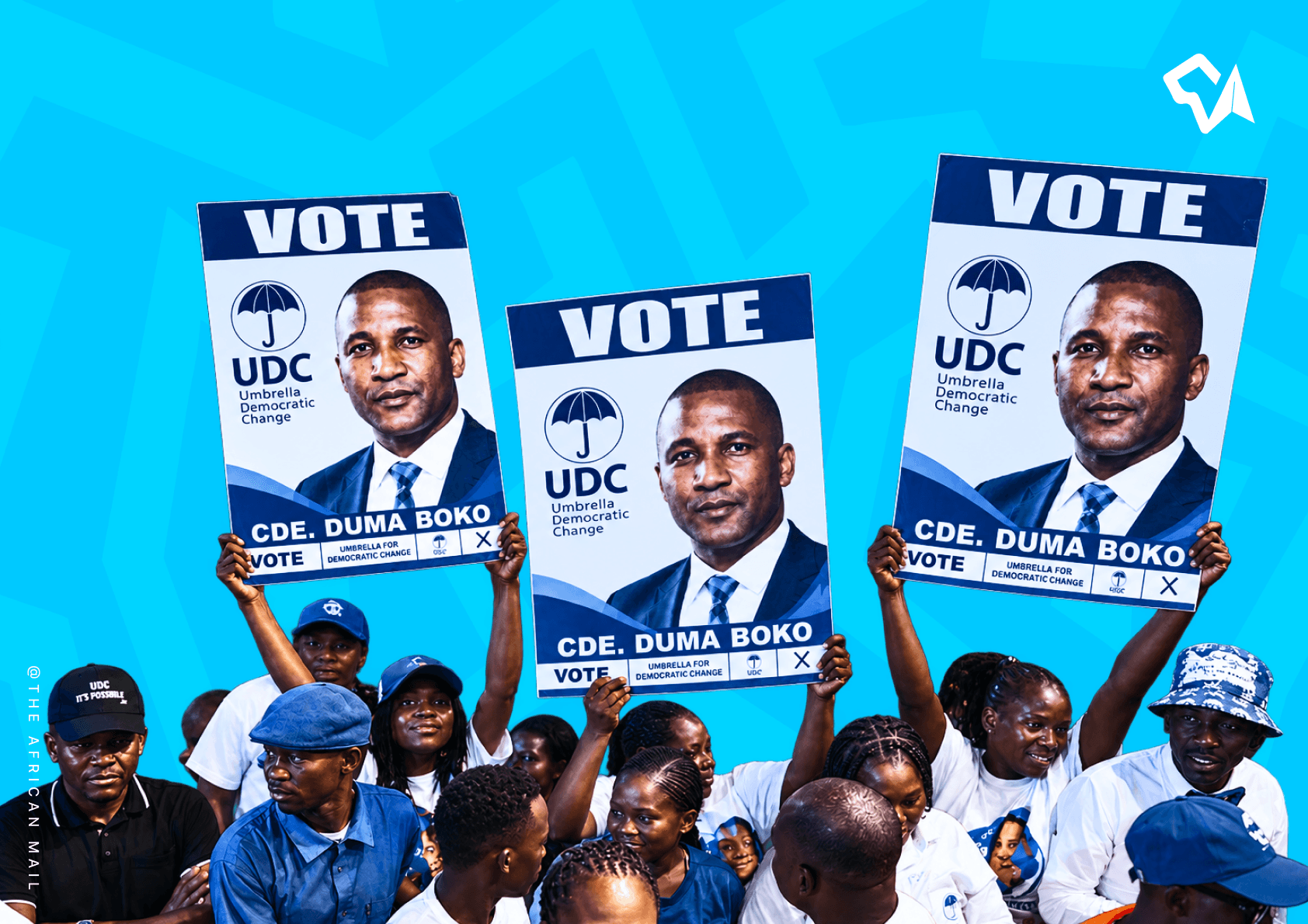
Duma Boko Suppoters
Holding the UDC together required grueling political maneuvering. Boko faced internal rebellions and lawsuits challenging his leadership. In 2014, he led the coalition to a strong second-place finish, securing 17 seats and becoming the Leader of the Opposition. But the political wilderness proved treacherous. During the 2019 general elections, the UDC suffered a bitter setback. Boko lost his parliamentary seat in Gaborone Bonnington North, subsequently losing his position as Leader of the Opposition.
The 2019 defeat was accompanied by intense pressure from state institutions. Boko faced aggressive tax scrutiny and asset seizures by the Botswana Unified Revenue Service (BURS), actions his supporters characterized as state-sponsored political harassment. The coalition itself began to fracture. Dumelang Saleshando, leader of the Botswana Congress Party (BCP), engaged in a highly publicized feud with Boko, ultimately pulling his party out of the UDC in 2023 over allegations of democratic centralization.
In a display of profound pragmatism, Boko offset these losses by forging an unlikely alliance with his former adversary, Ian Khama, who had defected from the BDP to form the Botswana Patriotic Front (BPF). The human rights lawyer who had once pursued Khama over extrajudicial killings now collaborated with him to break the BDP's hold on the Central District, demonstrating Boko's willingness to prioritize electoral victory over historical grievances.
The 2024 Electoral Earthquake
Operating from a social democratic ideology, Boko's 2024 campaign platform bypassed elite political squabbles to speak directly to the economic desperation of the electorate. He promised to double the minimum wage to P4,000 (roughly $300), introduce a universal old-age pension of P1,500, create 450,000 jobs, and implement universal health coverage.
The strategy resulted in a political realignment unprecedented in Botswana’s history. The UDC capitalized on the disillusionment of young voters, securing a governing majority and reducing the incumbent party to a mere four seats.
Composition of the 13th Parliament of Botswana following the 2024 General Elections | |||
Political Party | 2024 Seats Won | Seat Change from 2019 | Vote Percentage |
|---|---|---|---|
Umbrella for Democratic Change (UDC) | 36 | +28 | 37.21% |
Botswana Congress Party (BCP) | 15 | +8 | 21.06% |
Botswana Patriotic Front (BPF) | 5 | +2 | Third Party |
Botswana Democratic Party (BDP) | 4 | -34 | Fourth Party |
Governing in the Shadow of Diamonds
The elation of victory quickly gave way to the brutal mathematics of macroeconomic governance. Botswana’s economy is dangerously tethered to diamonds, which account for roughly 80 percent of exports. Boko inherited an economy that had contracted by 3.1 percent in 2024 due to a global supply glut, the rise of synthetic lab-grown diamonds, and reduced luxury spending.
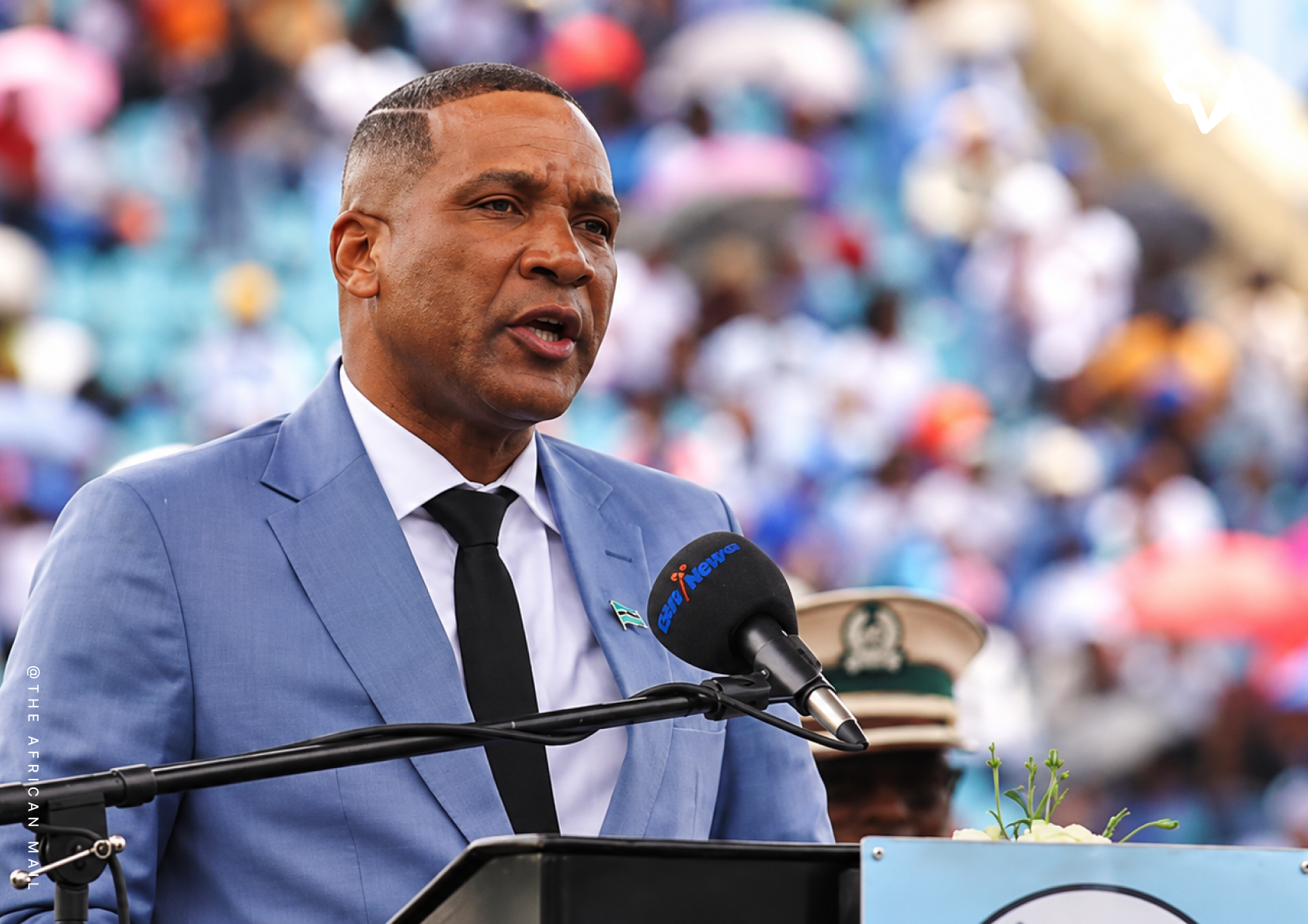
Boko’s immediate challenge was the renegotiation of the country's partnership with De Beers. While campaigning, he signaled a desire for Botswana to take greater control of its resources. By early 2025, prioritizing the nation's economic lifeline, Boko successfully finalized an enhanced 10-year sales agreement and extended De Beers' mining licenses for 25 years. To plug the immense fiscal deficit left by the previous administration, which stood at an alarming 7.56 percent of GDP, Boko appointed respected economist Ndaba Gaolathe as Vice President and Minister of Finance. Together, they turned to the Gulf, seeking investments from Qatar and Oman to stabilize the national reserves.
These macroeconomic moves, however, have not immediately translated into the localized relief his voters expected. By late 2025, Boko’s administration faced growing criticism regarding the slow implementation of his flagship campaign promises. Independent assessments reported that only 13 percent of the UDC’s manifesto promises were "in progress" after a year, with the P4,000 minimum wage and student allowance expansions largely stalled by the reality of empty state coffers. Civil society groups have pointed to the gap between electoral rhetoric and administrative reality, highlighting the difficult transition from being an opposition critic to an executive constrained by state finances.
Institutional Overhaul and the Constitutional Court
Despite economic headwinds, Boko has moved aggressively to reshape Botswana’s legal infrastructure. His most consequential, and controversial, legislative push has been the Constitutional (Amendment) Bill of 2025, designed to establish a dedicated Constitutional Court.
Boko argued that a specialized court was essential to expedite rights-based litigation and ensure that all state institutions operate strictly within constitutional boundaries. "Such a court strengthens democracy by ensuring that all institutions operate within the boundaries of the constitution," he told Parliament, viewing the reform as the ultimate safeguard for the vulnerable communities he once represented.
However, the speed at which the bill was pushed through Parliament generated significant pushback. Prominent legal figures, including former High Court judge Unity Dow, argued that Botswana’s existing High Court was already equipped to handle constitutional matters, questioning the logic of creating a new, expensive judicial tier during an economic crisis. Traditional leaders in the Ntlo ya Dikgosi (House of Chiefs) also raised concerns over a lack of public consultation.
Undeterred, the bill passed its third reading with 26 votes in favor and 12 abstentions. When confronted with the House of Chiefs' objections, Boko dismissed them, bluntly stating that their mandate was strictly limited to customary law: "Anything beyond that is just talk, and we merely listen". It was a display of ruthless executive pragmatism that contrasted sharply with his usual diplomatic elegance, revealing a leader determined to force institutional evolution, even at the cost of political friction.
The Man Behind the Mandate
To understand Duma Boko is to recognize a man deeply conscious of his public image and ideological footing. Known for his immaculate double-breasted suits, precise rhetoric, and occasional displays of culinary skill, he cuts the figure of a highly sophisticated statesman. Married to commercial litigation attorney Kaone Mokganedi since 2015, Boko guards his private family life closely while operating highly visibly in the public sphere.
His leadership style is distinctly intellectual, often weaving social democratic theory into public addresses. During his inauguration period, he urged African nations to rely on localized evidence rather than imported solutions, stating, "African solutions must be informed by African evidence and realities". Yet, this intellectualism is paired with a combative streak. When confronted with bureaucratic resistance to his educational infrastructure plans, he openly challenged the state apparatus, questioning why the government resisted private philanthropy intended to build schools amid a budget shortfall.
The Wider Significance
Duma Boko represents a departure from the traditional post-colonial African leader. He did not inherit his power from a liberation movement, nor does he rely on military backing. His authority is rooted in constitutional law, urban mobilization, and a sophisticated understanding of institutional leverage.
His legacy is currently being written in real-time. He has already secured his place in history by proving that peaceful, democratic regime change is possible against deeply entrenched incumbents through strategic coalition-building. His legal legacy, from defending the Basarwa to demanding accountability for state-sponsored violence, stands as a lasting contribution to the continent's human rights jurisprudence.
The ultimate success of his presidency, however, will be judged by a different metric. The electorate that elevated him expects economic salvation in an era where the traditional bedrock of Botswana’s wealth is no longer guaranteed. Dr. Duma Boko successfully won a three-decade battle against the state apparatus; his current, and arguably more difficult, challenge is proving that his vision for social equity can survive the unforgiving realities of executive governance.