

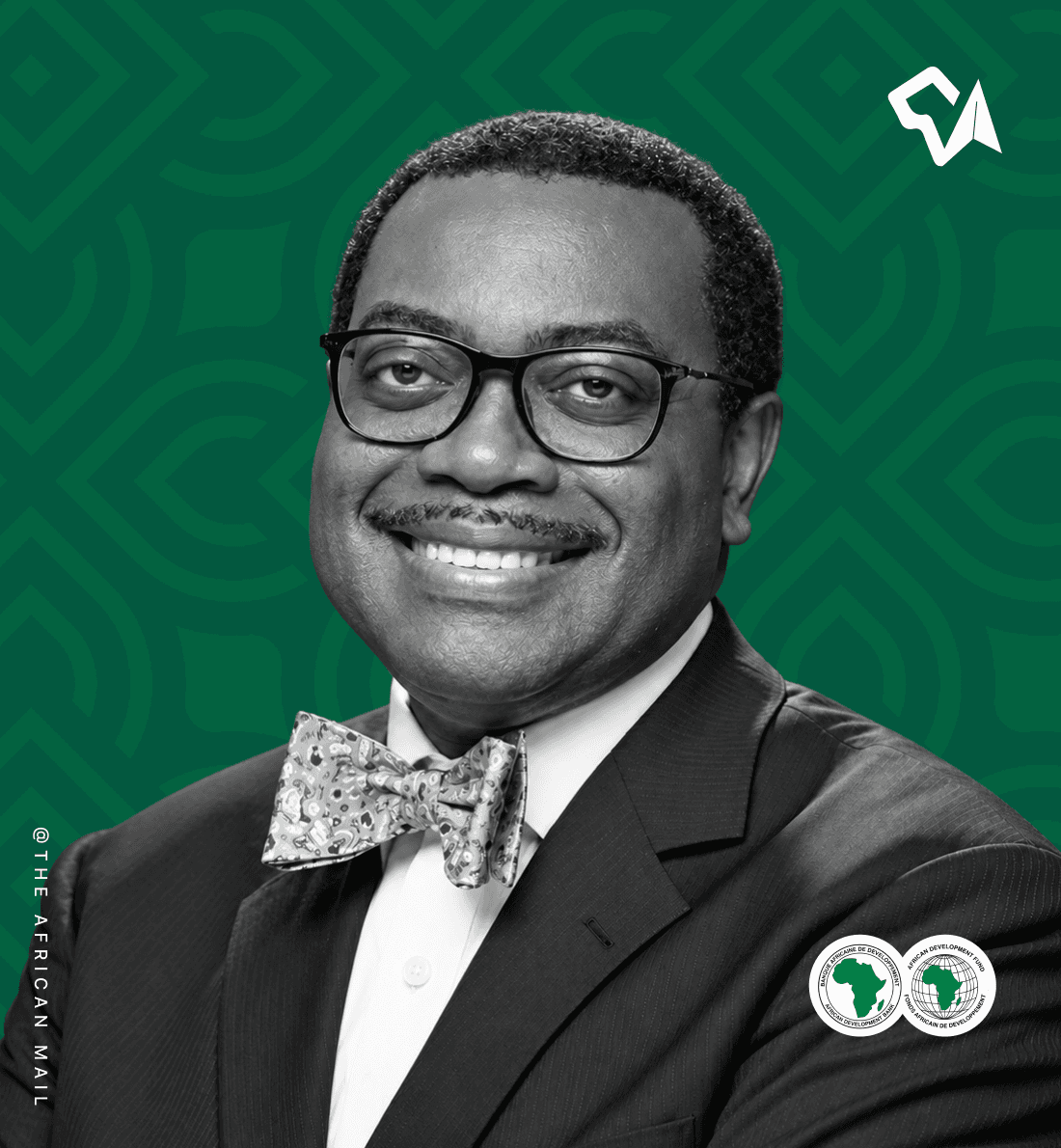
When Dr. Akinwumi Adesina stepped down from the presidency of the African Development Bank in September 2025, the auditorium in Abidjan held the charged atmosphere of a profound transition. Over ten years, delegates, heads of state, and civil society leaders had grown used to his elegance: sharp suits and immaculate bow ties. But Adesina was never merely a polished diplomat. Beneath that exterior was a pragmatic executive with, as observers put it, “a farmer’s heart, an economist’s mind, and a reformer’s soul.”
He transformed a constrained multilateral lender into a global financial powerhouse, expanding its capital base from $93 billion to $325 billion. More importantly, he shifted how global capital views Africa.
Origins and Philosophy
Adesina’s worldview rested on one conviction: Africa must move from managing poverty to managing wealth. As a former Nigerian Minister of Agriculture and a respected development economist, he saw the continent’s underdevelopment as a problem of misplaced priorities and weak capital leverage, not absent potential.

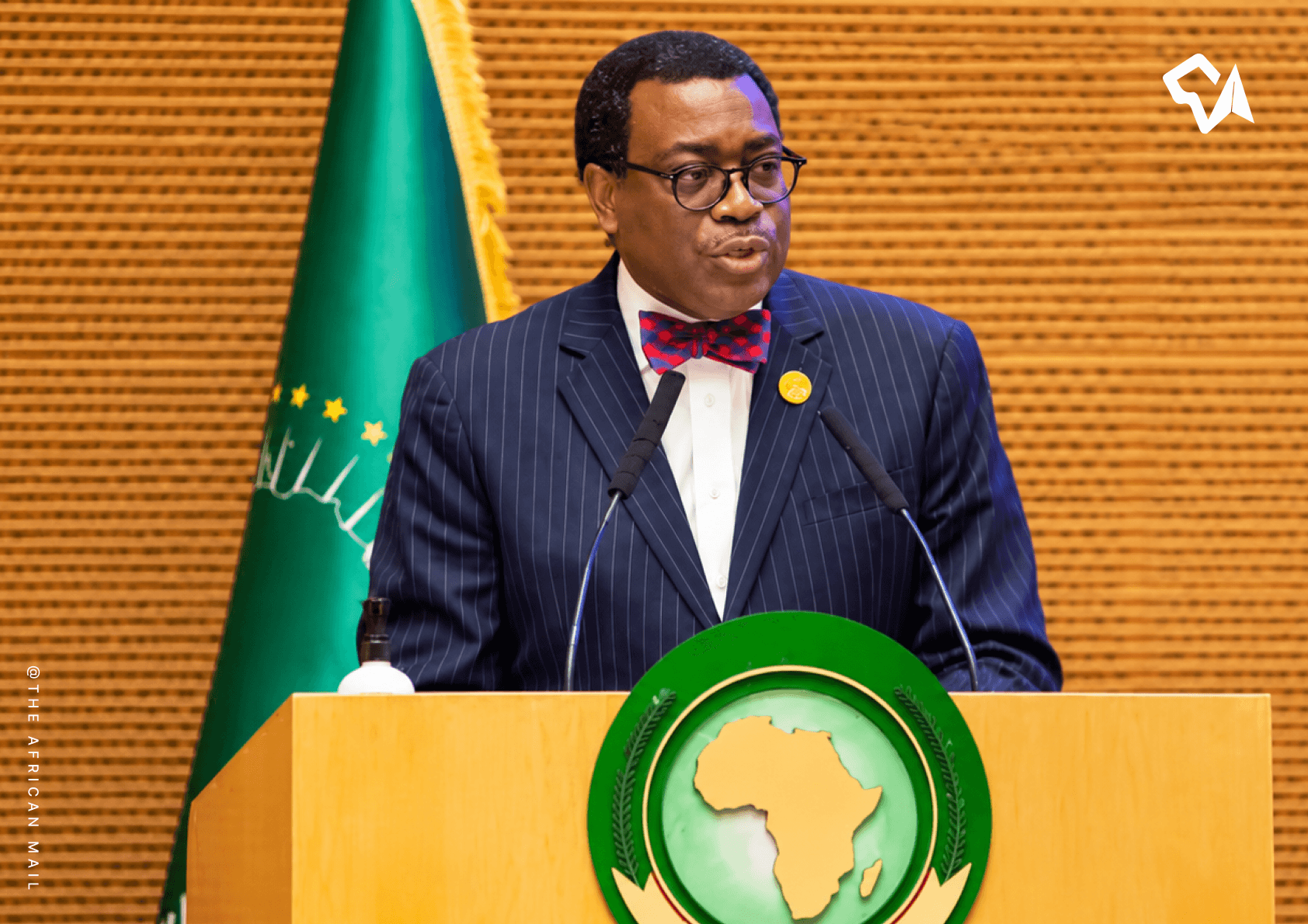
Adesina at the AU
For decades, African development had been framed around foreign aid and concessional handouts. Adesina rejected that framework. “The era of aid as we’ve known it is completely gone,” he often said. He pushed domestic resource mobilisation and disciplined investment. Political sovereignty, he argued, means little without financial independence. With Africa’s population projected to reach 2.4 billion by 2050, 75 percent under 35, the continent needed structural transformation, not just poverty alleviation.
"He saw the continent’s underdevelopment as a problem of misplaced priorities and weak capital leverage, not absent potential."
The Geopolitical Trial
The effort to overhaul an institution owned by 54 African nations and global powers was never going to be smooth. The defining test came in early 2020, when internal whistleblowers leveled sixteen allegations of ethical misconduct against Adesina, including nepotism, preferential treatment, and generous severance packages. The bank’s Ethics Committee quickly cleared him and dismissed the claims as frivolous.
But the crisis became geopolitical. The U.S. Treasury under Secretary Steven Mnuchin rejected the internal exoneration and demanded an independent probe, putting Washington at odds with Nigeria and other African shareholders who backed Adesina. Adesina submitted to international scrutiny.
An independent panel led by former Irish President Mary Robinson, with former Gambian Chief Justice Hassan Jallow and former World Bank Integrity Vice-President Leonard McCarthy, re-examined the complaints. It fully exonerated him, finding the allegations unsubstantiated and concluding that he had acted within the bank’s rules to protect its reputation and immunities. The panel also noted the unfairness of expecting a high officeholder to prove a negative without sufficient grounds.
The investigation revealed that Adesina had donated the $250,000 from his 2017 World Food Prize and $500,000 from the 2019 Sunhak Peace Prize, a combined $750,000, to the World Hunger Fighters Foundation to fund young African agribusiness entrepreneurs. Standard & Poor’s and Fitch immediately affirmed the AfDB’s AAA rating with a stable outlook.
Execution Over Rhetoric
With a second term, Adesina accelerated his “High 5s” strategy: Light up and Power Africa, Feed Africa, Industrialise Africa, Integrate Africa, and Improve the Quality of Life for the People of Africa. The initiatives directly affected an estimated 565 million people. According to official metrics, 128 million Africans gained access to improved health services, 104 million achieved better food security, 121 million benefited from upgraded transport infrastructure, and 28 million gained electricity.
His crisis response was equally practical. When the Russia-Ukraine war disrupted supply chains and threatened a food crisis, Adesina did not appeal for foreign food aid. He launched a $1.5 billion Emergency Food Production Facility. It supported 13 million farmers across 29 countries, produced 44 million metric tons of food, exceeded the bank’s target by 116 percent, and yielded a harvest valued at $17.3 billion. Through the Technologies for African Agricultural Transformation program, the bank also delivered heat-tolerant and climate-resilient crop varieties to 13 million farmers. Adesina believed the poverty of the African farmer was a man-made policy failure, not a geographic inevitability.
Dismantling the African Risk Myth
Adesina’s most consequential intellectual contribution may have been his attack on the “perception premium” applied to African investments. He argued that subjective risk assessments by Western credit rating agencies cost African nations billions in unjustified borrowing costs.
At Chatham House in London, he cited a 14-year Moody’s Analytics study showing Africa’s infrastructure loan default rate at just 1.9 percent. That compared with 12.4 percent in Eastern Europe, 10.1 percent in Latin America, and 6.6 percent in North America. “The fact is, Africa is the least defaulting continent,” he said.
He argued that fairer credit ratings could save African states at least $75 billion annually in excess debt service payments. He also initiated a framework to recalculate Africa’s GDP by including natural capital, estimated at $6.2 trillion in 2018. Properly valuing that wealth, he said, would lower sovereign debt-to-GDP ratios and expand borrowing capacity for structural transformation. Under his guidance, the bank launched sustainable hybrid capital, the first such issuance by a multilateral development bank, earning praise from the G7.
Governance, Civil Society, and Illicit Flows
Adesina knew that capital mobilization could be undone by corruption and weak institutions. The Mo Ibrahim Index of African Governance showed that overall governance progress had largely stalled since 2018, with many states burdened by debt and fragility.
At a high-level dialogue in Abidjan, he championed civil society as a counterbalance to state power. He noted that Africa loses an estimated $88.6 billion annually to illicit financial flows, even as it spends $163 billion servicing sovereign debt. He called for radical transparency and celebrated grassroots advocates. “They no longer whisper, they no longer beg, they no longer run away,” he said. “They speak loudly; they speak true.” Beth Dunford, the bank’s Vice President for Agriculture, Human and Social Development, affirmed that this partnership was essential to ensuring Africa’s wealth did not bypass its most vulnerable citizens.
Navigating a Fractured World
By 2025 and into 2026, the global environment had grown hostile. Global tariff wars, especially new U.S. trade policies, directly threatened 47 African countries. In an interview with CNN, Adesina warned of reduced foreign exchange earnings, weaker local currencies, rising inflation, and higher costs to service foreign-denominated debt.
His response was not grievance but strategic recalibration. He urged African nations to negotiate trade flexibly and diversify export markets. He demanded an end to the colonial-era model of exporting unrefined goods. “Africa must end the exports of its raw materials,” he warned, insisting the continent move up global value chains through processing and manufacturing. He championed the African Continental Free Trade Area to unlock a $3.4 trillion domestic market and supported “Mission 300,” a joint effort with the World Bank to connect 300 million more Africans to electricity by 2030. “Because without electricity, what can you do?” he asked.
The Legacy of Self-Reliance
Adesina’s era proved that African institutions, when governed with discipline, can rival established financial entities. He left the AfDB globally recognized for transparency and fortified by the highest-ever replenishment of the African Development Fund at $8.9 billion to support vulnerable states.
But his greatest legacy may be psychological. By defending Africa’s creditworthiness with data and directing capital toward indigenous infrastructure, Dr. Akinwumi Adesina showed what is possible when Africa stops asking for help and starts demanding its rightful place at the table. He did not simply finance development. He financed dignity.