

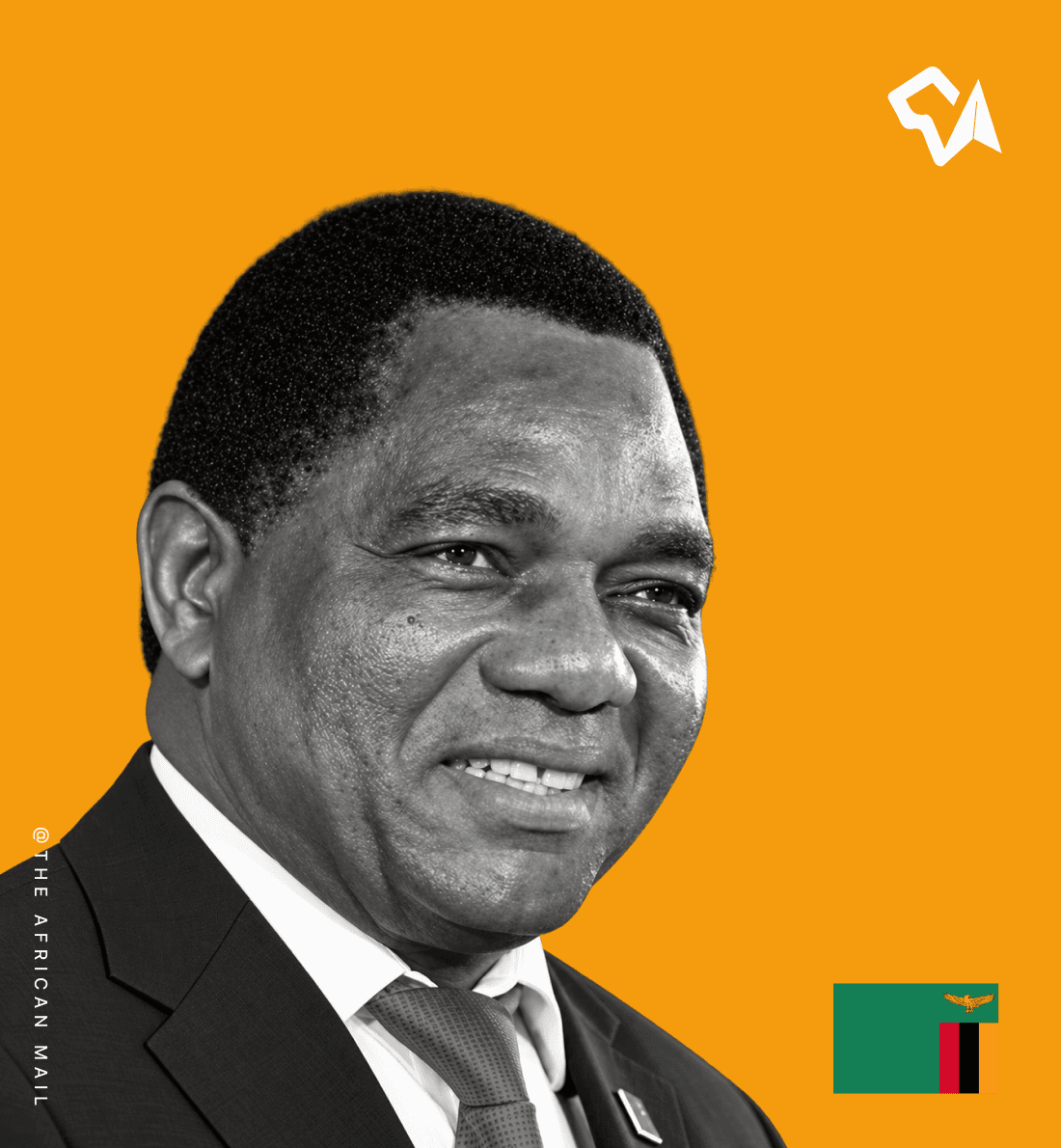
Hakainde Hichilema’s ascent to the Zambian presidency charts a course from barefoot cattle herding in the southern district of Monze to the highest office in Lusaka. Inheriting a nation in sovereign default in 2021, and subsequently battered by the worst drought in living memory, his tenure is an ongoing exercise in acute crisis management. The administration’s aggressive restructuring of billions in foreign debt, the radical decentralization of state funds, and the rollout of universal free education have fundamentally altered Zambia’s socioeconomic architecture. Yet, as the 2026 elections approach and domestic frustrations mount over the soaring cost of living, the democratic principles that swept him into power are undergoing severe strain.
The Corporate Foundation
To understand Hichilema’s approach to the presidency, it is necessary to examine the corporate pragmatism that defined his early life. Born on June 4, 1962, in Hachipona village, Hichilema grew up in a rural environment shaped by tending livestock, a formative experience that earned him the lifelong moniker of “cattle boy” and instilled a profound appreciation for agricultural economics. His academic aptitude provided an escape route; a government bursary allowed him to attend the University of Zambia (UNZA), where he graduated in 1986 with a Bachelor of Arts in Economics and Business Administration. He subsequently earned an MBA in Finance and Business Strategy from the University of Birmingham in the United Kingdom.
Armed with a global financial education, Hichilema ascended Zambia’s corporate ladder with remarkable velocity. By the age of 32, he was the Chief Executive Officer of Coopers & Lybrand Zambia, serving from 1994 to 1998, before taking the helm at Grant Thornton Zambia until 2006. He did not merely manage wealth; he accumulated it. Leveraging his rural roots, Hichilema built an agricultural empire, acquiring over 70 ranches and 700,000 animals to become the second-largest cattle rancher in the country. Concurrently, he became a major shareholder and board advisor for Zambeef Products Plc, Zambia’s largest integrated cold-chain food producer, cementing his status as a titan of domestic industry.
The Wilderness and the Breakthrough
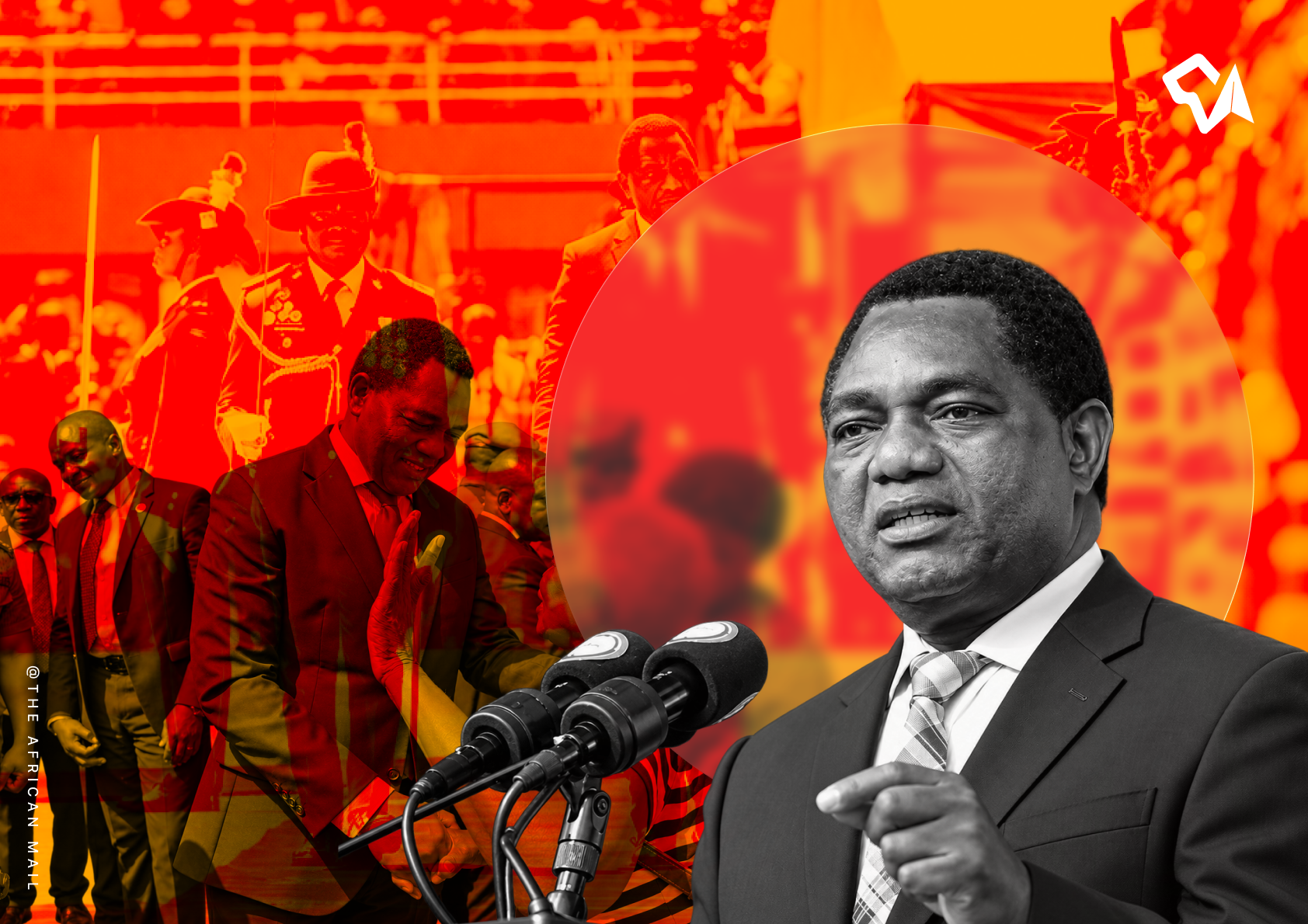
Hichilema’s pivot to public service began in 2006 following the death of Anderson Mazoka, the founder of the United Party for National Development (UPND) and Hichilema’s close friend and business mentor. Taking control of the UPND, Hichilema embarked on a grueling, fifteen-year quest for the presidency. The journey was defined by repeated rejection by the electorate and an increasingly hostile state apparatus. In a 2020 interview, he said he no longer counted how many times he had lost.
Hichilema’s presidential results, 2006 to 2021. Figures from analysis of Zambia’s 2021 General Election | |||
Election Year | Candidate Position | Share of National Vote | Outcome |
|---|---|---|---|
2006 | UPND / UDA Alliance | ~25.0% | Lost (3rd Place) |
2008 (Snap) | UPND | ~19.7% | Lost (3rd Place) |
2011 | UPND | ~18.1% | Lost (3rd Place) |
2015 (Snap) | UPND | 46.6% (Lost by 27,000 votes) | Lost (2nd Place) |
2016 | UPND | 47.6% | Lost (2nd Place) |
2021 | UPND | 59.0% | Won (1st Place) |
The turning point in his public perception occurred during the Edgar Lungu administration. In April 2017, following a minor traffic incident in which Hichilema’s convoy allegedly failed to yield to President Lungu’s motorcade, heavily armed police stormed Hichilema’s residence. Tear gas was fired into the home, asphyxiating his asthmatic wife, Mutinta (whom he married in 1988), and their children. Hichilema was arrested on fabricated treason charges and thrown into Mukobeko Maximum Security Prison for 127 days. He spent eight days in solitary confinement without food or water and later recounted to the BBC being tortured and pepper-sprayed.
Rather than breaking him, the incarceration forged a political martyr. The unjust imprisonment drew international condemnation from the United States, the European Union, and the Catholic Church, elevating his profile from a wealthy technocrat to a symbol of democratic resistance. Reflecting on the struggle, Hichilema noted that enduring state harassment was part of a broader national sacrifice, asserting that the fight for freedom was "not an HH agenda" but a collective necessity for a hurting populace.
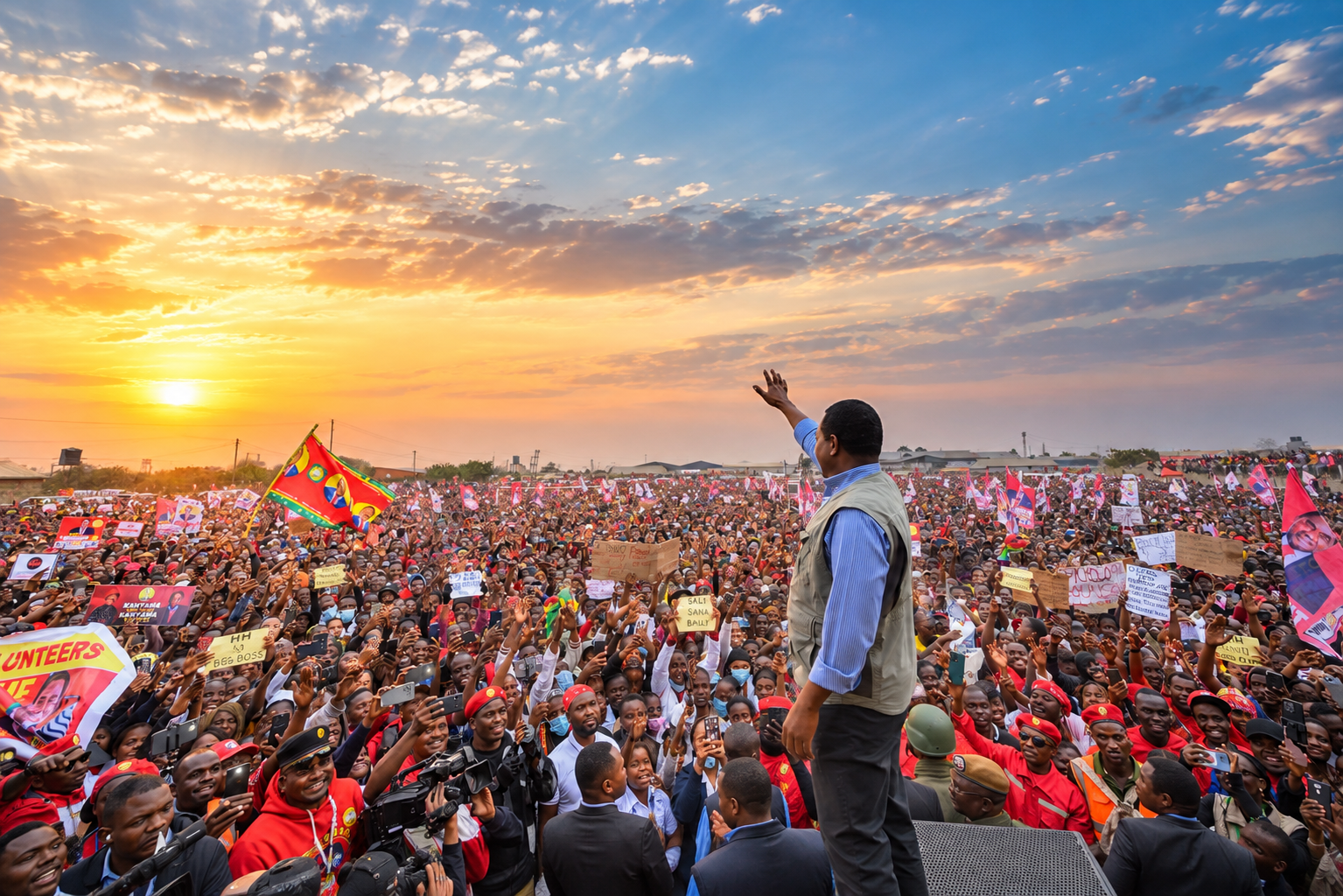
By the time the 2021 general election arrived, the Zambian populace was suffocating under a collapsed economy, runaway inflation, and rampant youth unemployment. Hichilema, affectionately dubbed “Bally” (a slang term for father or elder) by a mobilized youth electorate, campaigned on a promise of economic salvation, famously declaring in his inaugural address that "no Zambian should go to bed hungry". He defeated the incumbent Lungu in a landslide, capturing 59% of the vote and orchestrating a rare, peaceful transfer of power in the region.
Engineering a Macroeconomic Recovery
Upon taking office on August 24, 2021, Hichilema inherited a state in profound fiscal distress. Approaching the crisis with the discipline of a corporate auditor, his administration prioritized macroeconomic stabilization and repairing fractured relationships with international lenders.
His most complex achievement to date has been navigating the labyrinthine process of debt restructuring under the G20 Common Framework. In March 2024, after years of grueling negotiations, the Zambian government and a steering committee of private creditors reached a landmark agreement to restructure $3 billion in international Eurobonds. Under the deal, bondholders agreed to a nominal reduction in debt payments of approximately 22% (foregoing roughly $840 million in claims) and provided $2.5 billion in cash-flow relief through 2025. While civil society organizations observed that private bondholders ultimately secured slightly better repayment terms (97 cents on the dollar under enhanced conditions) than official bilateral creditors like China and the UK (79 cents), the agreement was nevertheless hailed by the International Monetary Fund (IMF) and the World Bank as a critical milestone. This paved the way for the IMF to augment its Extended Credit Facility (ECF) arrangement, injecting vital liquidity into the Zambian economy and reducing public debt from 133% of GDP in 2023 to 86% by mid-2025.
Simultaneously, Hichilema sought to revitalize Zambia’s mining sector. Establishing a highly ambitious target of producing 3 million tonnes of copper annually by 2032, his administration overhauled regulatory frameworks to restore investor confidence. The strategy yielded immediate dividends. First Quantum Minerals committed $1.25 billion to the S3 Expansion Project at the Kansanshi mine and an additional $100 million to complete the Enterprise Nickel Mine, positioning Zambia to become Africa's premier nickel producer and a central node in the global electric vehicle supply chain.
Decentralization and Social Policy
Beyond macroeconomic maneuvering, Hichilema has sought to institutionalize equity. In 2022, his government initiated one of the most sweeping social policy shifts in the region by implementing free education from early childhood through secondary school. The policy eliminated tuition and examination fees, sparking a surge in enrollment. Over 2.3 million additional learners entered the school system, fundamentally changing the psychology of Zambian households that had previously kept children home due to unpaid balances.
To manage this influx, the government recruited over 40,000 new teachers and constructed 3,000 classrooms. The rapid expansion has strained infrastructure, with some educators managing classes of over 100 students. Education Minister Douglas Syakalima has framed the overcrowding as a necessary transitional challenge, arguing it is better to have children in congested classrooms than uneducated on the streets.
Parallel to educational reform is Hichilema’s radical expansion of the Constituency Development Fund (CDF). Designed to decentralize resources and bypass bureaucratic bottlenecks in Lusaka, the CDF was massively expanded from a mere K1.6 million per constituency in 2021 to K25.7 million in 2022, scaling up to K36.1 million for 2025. The funds are earmarked for community projects, youth and women’s empowerment grants, and secondary boarding bursaries, as set out in the CDF guidelines. Local authorities have utilized CDF money to manufacture thousands of school desks using local contractors, drill boreholes, and construct maternity annexes, pushing tangible governance directly into rural hands.
The Climate Shock
Despite these legislative and economic victories, Hichilema's administration is currently fighting a war against geography and climate. In early 2024, an El Niño-induced drought decimated the region, destroying roughly 40% of Zambia's cultivated maize, amounting to nearly 1 million hectares. In February 2024, Hichilema formally declared the drought a national disaster and emergency.
The drought’s impact extends far beyond agriculture. Because Zambia relies heavily on hydroelectric power, the lack of rainfall drove water levels at the Kariba Dam to near-record lows. The nation endured crippling load-shedding schedules of up to 21 hours a day, strangling small businesses and urban centers. Consequently, economic growth, which had rebounded to 5.4% in 2023, was drastically suppressed, requiring Hichilema to expand social cash transfers for the 6.6 million Zambians in immediate humanitarian need. While GDP growth demonstrated resilience by recovering to an estimated 4.9% in the first half of 2025, the energy crisis laid bare the systemic vulnerability of Zambia's economic architecture.
The Paradox of Power
As the economic realities of the drought bite and the 2026 general election approaches, Hichilema’s political persona is undergoing intense scrutiny. Elected on a platform of democratic renewal, civil liberties, and anti-corruption, the "New Dawn" government is facing mounting accusations of democratic backsliding.
The anti-corruption drive, a central pillar of his campaign, has faltered in the eyes of the public. While the Economic and Financial Crimes Court was established, the administration has struggled to secure high-profile convictions. The credibility of the anti-graft campaign was severely damaged in July 2024, when Hichilema abruptly dissolved the board of the Anti-Corruption Commission (ACC). The dissolution followed explosive allegations that the ACC had been captured by senior state officials, with specific scrutiny directed at Hichilema’s Solicitor General, Marshal Muchende, who was accused of accepting a $500,000 bribe. Hichilema’s silence on the allegations against his own appointee has fueled speculation that the president is shielding political allies, undermining his zero-tolerance rhetoric.
Furthermore, the space for civil dissent appears to be narrowing. Early in his term, Hichilema was lauded for abolishing the death penalty and repealing the colonial-era law regarding criminal defamation of the president. However, in 2025, his administration enacted the Cyber Security Act and the Cyber Crimes Act. The new legislation quietly reintroduced criminal defamation and imposed stringent data localization mandates, which digital rights advocates argue provides legal cover for state surveillance and self-censorship.
Simultaneously, the Zambia Police Service has increasingly weaponized the Public Order Act to disrupt opposition rallies. Journalists covering unsanctioned opposition events have been subjected to arbitrary detention and physical assault, while investigative reporters, such as Thomas Zgambo, have been jailed for publishing articles critical of the administration. Adding to the political volatility is the resurgence of Edgar Lungu, who has announced a political comeback to challenge Hichilema in 2026. The rivalry has grown intensely bitter, drawing concerns from international observers about the potential for democratic regression in one of Southern Africa’s most stable republics.
A Legacy in the Balance
On the global stage, Hichilema has carefully cultivated a foreign policy of "positive neutrality", successfully articulating Zambia’s national interest in economic terms. He has managed the delicate triangulation of securing Western IMF backing while maintaining strategic ties with China, elevating bilateral relations with Beijing to a comprehensive strategic partnership during the 2024 FOCAC summit. Speaking before the UN General Assembly, he invoked the prophetic imagery of beating swords into plowshares, asserting that "the foundation to sustainable economic growth and development is peace and stability".
Hakainde Hichilema is a leader caught between the mechanics of statecraft and the volatile realities of a developing nation. His story reveals the immense friction that occurs when technocratic ambition collides with deep-seated institutional dysfunction, political self-preservation, and environmental catastrophe. To the international community, he remains a model of economic orthodoxy who dragged his country out of a historic default. To the millions of Zambian families whose children are now sitting in classrooms free of charge, his policies have provided a tangible ladder out of intergenerational poverty.
Yet, for a population that has spent the last year grappling with unprecedented power cuts, soaring inflation, and watching the administration utilize familiar tools of state repression against its critics, the transition from opposition crusader to incumbent enforcer is jarring. Hichilema’s ultimate legacy will not be defined merely by the sovereign ledgers he has balanced or the global capital he has catalyzed. It will be determined by his ability to maintain his democratic convictions when the political and economic costs are at their highest. He has already proven that he can survive the darkness of a prison cell; his defining test is ensuring he does not allow those same shadows to reclaim the state.