



The paradigm of Africa as a mere "frontier market" is structurally obsolete. The continent’s combined gross domestic product (GDP) reached an unprecedented $3.32 trillion, establishing an economic weight that directly rivals some of the world's largest single-nation economies. Beneath this headline figure lies a more complex, urgent, and highly investable story: a widening gap between the wealth being generated across the continent and the financial systems designed to move it. While mobile money flows reached a staggering $1.43 trillion, approximately 350 million adults across the continent remain entirely unbanked.

The friction of moving money across these fragmented systems has catalyzed a fierce commercial struggle. At the center of this conflict are two titans of African financial technology: Flutterwave and Paystack. What began a decade ago as a race to build simple Application Programming Interfaces (APIs) to help merchants accept card payments has evolved into an all-out war to control the continent's underlying financial plumbing. The current landscape is no longer just about payment processing; it is about infrastructure sovereignization, regulatory capture, and the race to capture a transaction market projected to easily surpass $3 trillion.
To approach the African continent as a monolith is a fundamental analytical error. A sophisticated second tier of economies has emerged at a sufficient scale to demand dedicated capital, specialized infrastructure, and tailored financial products.
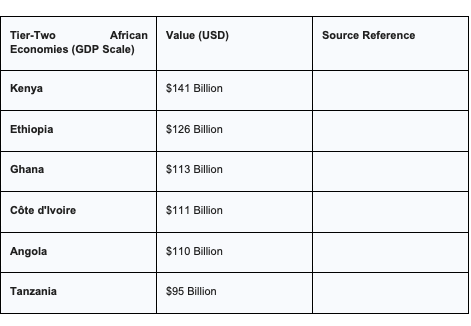
These high-growth corridors are expanding amid rapid urbanization, falling data costs, and high smartphone penetration. According to a report by Genesis Analytics, the continent's digital payments economy is expected to reach $1.5 trillion by 2030, driven by an internet penetration compound annual growth rate (CAGR) of 20% and an annual financial inclusion expansion of 6%. Integration of consumer-led payment systems—which generated $1.2 trillion in 2024 through remittances, card payments, and mobile money—with business-led domestic and cross-border payments of $1.5 trillion brings the total addressable payments market to $2.7 trillion, with a clear trajectory to exceed $3 trillion within the immediate horizon.
The Genesis of Friction: Legacy Systems and the Pre-2015 Landscape
To understand the scale of the current fintech conflict, one must examine the operational landscape of African commerce prior to 2015. Historically, the continent was almost exclusively a cash economy, with over 90% of all retail transactions settled in physical currency. This heavy reliance on cash was not a symptom of economic stagnation, but rather a rational response to a deeply fragmented and prohibitively expensive formal banking sector. For early e-commerce pioneers, digital content creators, and cross-border enterprises, the lack of digital payment rails was an existential barrier. For instance, when Iyinoluwa Aboyeji co-founded Andela, a software developer training platform, the firm was forced to process payments to African developers only once every one to three months. This delay was necessary to avoid incurring highly prohibitive transaction fees and enduring multi-week settlement delays from traditional banking intermediaries.
The early digital payment ecosystem was dominated by rigid, legacy gatekeepers. In Nigeria, the dominant processor was Interswitch Webpay. While highly secure and deeply integrated with traditional commercial banks, Interswitch Webpay was structurally inaccessible to small and medium enterprises (SMEs). Merchants seeking to integrate online checkout faced a mandatory, non-refundable one-time setup fee of ₦150,000—a massive capital outlay for early-stage startups—and were subjected to lengthy, paper-heavy KYC processes that could drag on for weeks. Furthermore, Webpay offered a 1.5% transaction commission, whereas alternative solutions like Interswitch Quickteller charged a lower setup fee of ₦16,500 but extracted a much higher 3.5% commission per transaction. This high-barrier system effectively excluded the vast majority of local businesses from participating in the nascent digital economy.
Merchant ---> ₦150,000 Setup Fee ---> Multi-Week Manual KYC ---> 1.5% Commission
[Modern API-First Model (Paystack/Flutterwave)]
Merchant ---> Zero Setup Fee ---> Instant Digital Onboarding ---> 1.4% - 1.5% Commission
At the same time, regional payment rails developed in isolation. East Africa, anchored by Kenya, bypassed traditional card networks entirely through the explosive, telco-led growth of Safaricom's M-Pesa, launched in 2007. By 2024, mobile money agents in Kenya facilitated transactions worth KES 8.7 trillion (approximately $67.3 billion), accounting for an impressive 53% of the nation’s GDP, with M-Pesa commanding a 92.3% market share. West Africa, however, remained card- and bank-centric, creating a geographical and technological divide that severely limited cross-border trade.
The historical evolution of Nigeria's digital payment instruments from 2016 to 2024 highlights this structural transition. In 2016, cheques and ATM transactions made up over 80% of total payment volumes, but by 2023, their share had plunged to below 1% and 3%, respectively.
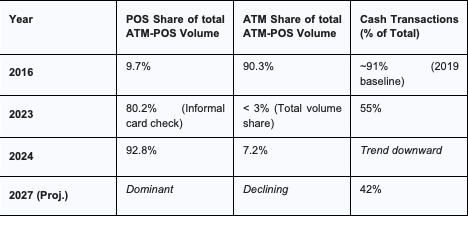
This dramatic shift reflects a broader, systemic migration toward digital touchpoints, driven by the emergence of developer-friendly fintech platforms. The launch of real-time interbank electronic funds transfers via the NIBSS Instant Payments (NIP) platform in 2011 laid the raw technical rails. However, it required the entry of highly agile technology companies to build the user-friendly, high-conversion interfaces necessary to unlock this infrastructure for the mass market.
The Architectures of Access: Key Players, Mechanisms, and Corporate Evolutions
The emergence of Paystack and Flutterwave in 2015 and 2016 shattered the gatekeeper paradigm. Founded by software engineers Shola Akinlade and Ezra Olubi, Paystack was built with a singular focus: to offer a clean, developer-friendly API that allowed merchants to accept online card payments within minutes, completely eliminating setup fees. Paystack’s rapid, design-centric execution caught the attention of Silicon Valley, leading to its historic acceptance into Y Combinator in 2016, where it secured an initial $120,000 seed investment. By October 2020, after scaling to serve over 60,000 merchants and processing more than half of Nigeria's online transactions, Paystack was acquired by global payment giant Stripe for over $200 million. This transaction marked a major shift, integrating the Lagos-born startup into a global payments network while preserving its operational independence.
Simultaneously, Flutterwave was launched in 2016 by Aboyeji, Olugbenga "GB" Agboola, and Adeleke Adekoya. While Paystack focused heavily on perfecting checkout conversions for local developers, Flutterwave focused on building the underlying cross-border payment infrastructure. Flutterwave sought to construct an end-to-end network that could link cards, mobile money wallets, and bank accounts across multiple jurisdictions, allowing global enterprises like Uber, Netflix, and Booking.com to operate seamlessly in Africa. By leveraging this enterprise-first, multi-currency approach, Flutterwave expanded its footprint to 34 African countries, eventually securing a valuation exceeding $3 billion.
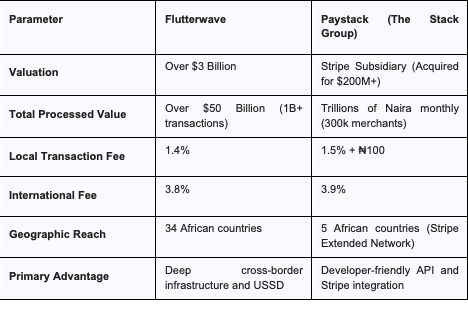
By 2026, the battleground has expanded far beyond simple payment processing. For a decade, these platforms operated as high-tech wrappers built on top of traditional banking rails. Every payment settled on their platforms had to be routed through a partner bank, which held the deposits, performed the clearing, and extracted a significant portion of the transaction margin. Flutterwave, for example, processed over $40 billion across more than one billion transactions, yet historically retained none of these funds on its own balance sheet. This model proved highly vulnerable to partner bank system failures, which triggered virtual account outages and transaction delays, eroding customer trust.
This systemic vulnerability triggered what has been termed the "Fintech Bank Bug"—a coordinated, strategic push by mature fintech platforms to acquire their own banking licenses and transform into fully licensed deposit-taking financial institutions.
Fintech Interface ---> Commercial Bank (Holds Deposit & Clears) ---> Margin Split
Licensed Fintech MFB (Holds Deposit Directly) ---> Internalized Clearing ---> 100% Margin Retention
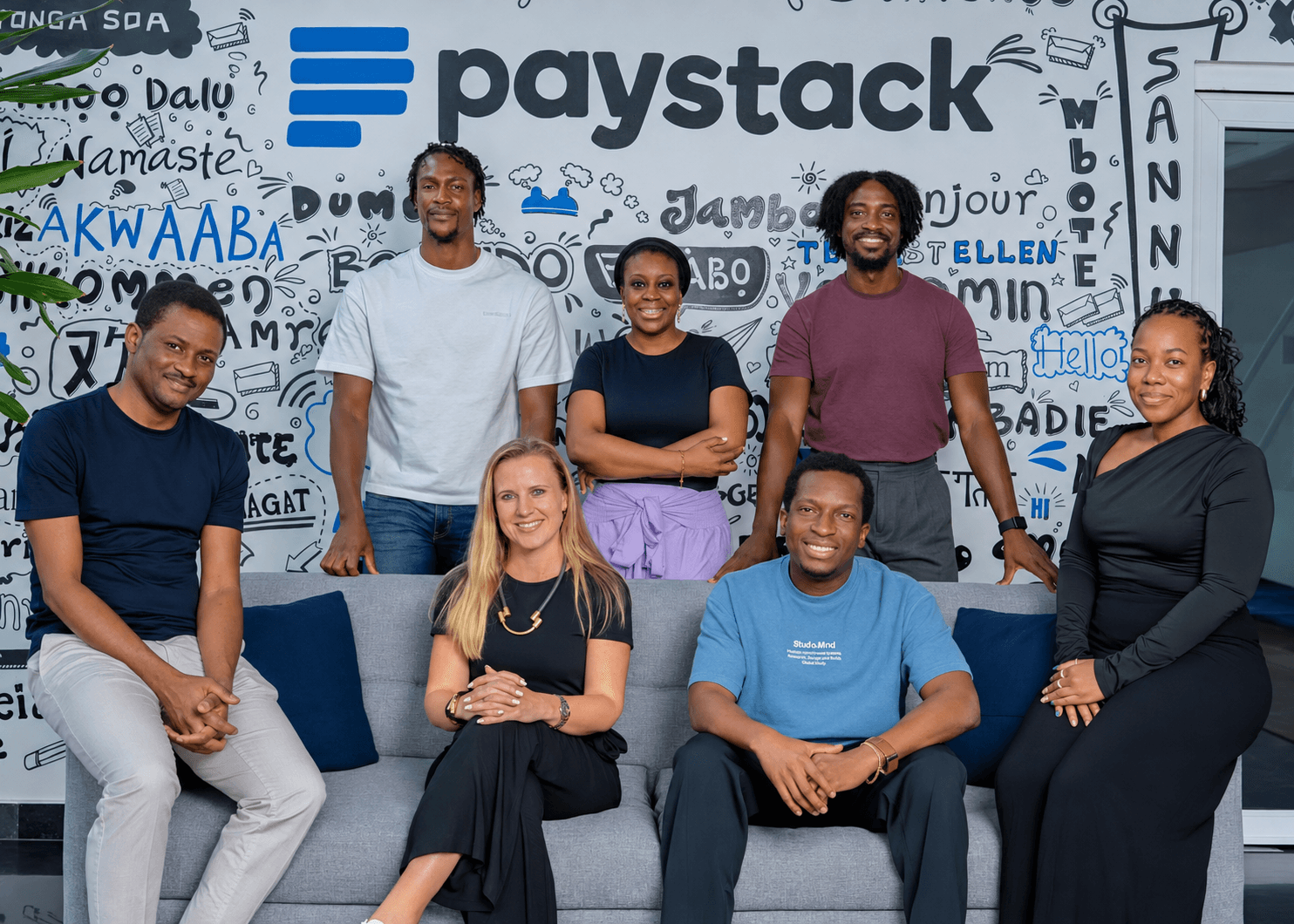
Paystack Team Photo Story
In early 2026, both titans completed massive corporate maneuvers to transition from payment gateways to regulated financial conglomerates.
● Flutterwave secured a highly coveted Nigerian Microfinance Banking license in April 2026. This regulatory milestone allows the unicorn to hold merchant deposits directly, internalize key steps of the clearing chain, and improve settlement speeds. The license enables Flutterwave to offer dedicated personal account numbers to over one million users of its remittance platform, SendApp, and provide comprehensive treasury management tools to over two million business clients.
● Paystack executed an equally aggressive corporate restructuring. Marking its tenth anniversary, the company formed The Stack Group (TSG), a comprehensive holding company designed to manage its diversified financial services. Backed by Stripe, Shola Akinlade, and the group's 209 employees, TSG acquired Ladder Microfinance Bank in January 2026, rebranding it as Paystack Microfinance Bank. (Notably, co-founder Ezra Olubi was terminated in November 2025 over allegations of inappropriate behavior and holds no equity stake in the newly formed TSG parent holding structure).
Operating under its own license, Paystack can now directly hold deposits and issue credit without relying on commercial banking intermediaries. To capture the consumer bank transfer market, Paystack launched Zap, a consumer-focused instant money transfer application promising 30-second transfer reliability. This aggressive consumer push initially drew regulatory pushback, resulting in a ₦250 million fine from the Central Bank of Nigeria (CBN) for operating beyond its licensing scope, though Paystack has since secured full regulatory clearance for Zap.
Additionally, Flutterwave's acquisition of open banking infrastructure provider Mono in early 2026 has introduced a complex layer of infrastructural dependency. Mono provides critical credit-scoring and account-verification APIs that competitor fintechs like Moniepoint and PalmPay rely on to power their lending products. Unlike the United States, where antitrust regulators blocked the Visa-Plaid merger to protect data layer competition, African regulators have not yet established robust safeguards governing infrastructure monopolies. Consequently, Flutterwave now controls the data highway that its direct competitors depend on, giving it unprecedented visibility into the transaction flows of its rivals.
The Ground-Level Metamorphosis: Agency Banking, Credit Deserts, and Social Realities
The macro-level war for digital infrastructure is directly reshaping the financial realities of millions of everyday citizens. Historically, the informal sector—comprising petty traders, open-air market vendors, and artisans—was completely shut out of the formal credit loop. Nigeria’s small business financing gap is estimated at a staggering $32 billion. Traditional commercial banks are structurally incapable of bridging this gap, as they require audited financial statements, historical collateral, and physical bank branch visits.
With the acquisition of banking licenses, Flutterwave and Paystack are leveraging their decade-long cache of transaction data to address this credit freeze. Every transaction processed through a merchant’s checkout terminal or virtual account provides live, granular data on revenue consistency, seasonal cash flow, and consumer demand. By analyzing these digital footprints rather than static paper audits, these platforms can underwrite working capital loans to micro-merchants with unprecedented precision.
However, as Flutterwave and Paystack pivot toward banking, they are running headfirst into established consumer-facing fintech giants: Moniepoint and OPay. These players did not start as developer APIs; they began at the street level, capturing the physical, cash-to-digital touchpoints through massive networks of point-of-sale (POS) terminals and mobile agents.
Developer-First APIs (Online Checkout) ---> Enterprise Scaling ---> Microfinance Banking License
Offline POS Terminals / Agent Networks ---> Cash-to-Digital Flow ---> Digital Business/Consumer Banking
OPay has captured an estimated 35% of the Nigerian mobile money market, focusing on Gen Z and Millennial consumers, informal sector workers, and peri-urban residents. By offering zero-fee peer-to-peer (P2P) transfers and high-yield savings products like OWealth (which advertises a 15% return), OPay successfully converted millions of unbanked citizens to digital banking. This growth was heavily accelerated by the operational fragility of traditional banks during the 2020 lockdowns and the government's highly controversial cash crunch in early 2023, during which physical Naira was abruptly mopped up from circulation. During these periods of intense cash scarcity, the scalable, cloud-native platforms of OPay and PalmPay remained operational, while legacy banking apps collapsed under the weight of transaction spikes.
Moniepoint (formerly TeamApt) has executed a dominant merchant-first offline campaign. By deploying over 600,000 POS terminals and field agents across every local government in Nigeria, Moniepoint established itself as the primary operating system for physical retail, processing over ₦30 trillion in payments monthly. In 2025 alone, Moniepoint leveraged this terminal data to disburse over ₦1 trillion in business loans, enabling community provision stores and pharmacies to scale their inventory.

Yet, this rapid scale has exposed critical compliance and security vulnerabilities. Under the Central Bank of Nigeria's principal liability clauses, licensed fintechs are held fully liable for the actions of their independent agents. In a low-trust environment, this has created significant exposure. Kidnappers and bandit networks in Nigeria's North-West (which accounts for 63.5% of kidnapping incidents) frequently exploit POS operators to collect ransom payments, directly leveraging the speed of fintech rails to avoid tracking. Between July 2024 and June 2025, verified, media-reported ransom payments totaled ₦2.57 billion. This prompted intense regulatory intervention, culminating in a strict CBN mandate requiring all POS terminal operations to implement rigorous physical geo-tagging and enhanced KYC validation by an April 1, 2026 deadline to disrupt criminal networks.
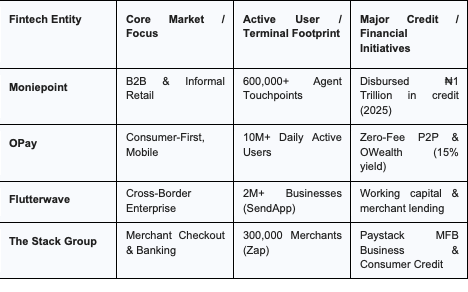
Fintech Entity Core Market / Focus Active User / Terminal Footprint Major Credit / Financial Initiatives
Moniepoint B2B & Informal Retail 600,000+ Agent Touchpoints Disbursed ₦1 Trillion in credit (2025)
OPay Consumer-First, Mobile 10M+ Daily Active Users Zero-Fee P2P & OWealth (15% yield)
Flutterwave Cross-Border Enterprise 2M+ Businesses (SendApp) Working capital & merchant lending
The Stack Group Merchant Checkout & Banking 300,000 Merchants (Zap) Paystack MFB Business & Consumer Credit
Geopolitical Arbitrage: Continental Sovereignty vs. Global Financial Integration
The financial innovations pioneered in Africa are no longer localized experiments; they are increasingly serving as structural blueprints for the global digital economy. For decades, mature Western banking systems, such as those in Europe and North America, developed under highly automated but rigid clearing frameworks. While these systems benefit from extensive legacy capital and robust global integration, they remain heavily reliant on slow, credit-card-dominant rails that impose high fees on merchants.
In contrast, Africa’s leapfrogged financial architecture bypasses legacy card networks entirely. The continent's reliance on real-time mobile wallets, instant bank transfers, and developer-friendly API blocks has created an ecosystem where transactions settle instantly at a fraction of Western costs. This structural agility is prompting global institutions to seek deep integrations with African rails. Stripe’s $200 million acquisition of Paystack was not an isolated transaction, but a deliberate move to secure a high-growth engine capable of plugging Stripe’s global merchant base directly into Africa's domestic payment systems.
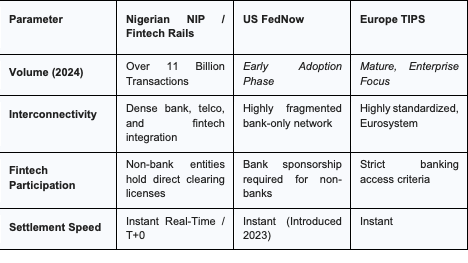
This difference in operational speed and integration is evident when comparing Africa's emerging real-time systems to established Western infrastructures:
However, the primary hurdle to unlocking Africa’s full $3 trillion payment potential remains cross-border friction. Intra-African trade currently incurs transaction costs between 7% and 20% of the total value, with settlement times dragging on for three to five days. To resolve this, both public and private entities are executing massive structural maneuvers:
● The Pan-African Payment and Settlement System (PAPSS): Backed by the African Continental Free Trade Area (AfCFTA) Digital Trade Protocol, PAPSS is linking over 160 commercial and central banks. By allowing transactions to clear in local currencies, PAPSS bypasses the historical requirement of routing regional payments through European or American correspondent banks, saving billions in foreign exchange conversion costs.
● Stablecoin-Based Rails: Private platforms are moving even faster. In October 2025, Flutterwave integrated Polygon’s blockchain infrastructure to power a stablecoin-based cross-border payments engine. This allows enterprises to bypass volatile local foreign exchange markets and settle transactions instantly, outside of standard banking hours.
● Global Remittance Hubs: Moniepoint has aggressively moved into the global remittance corridor with the 2025 launch of "MonieWorld" in the United Kingdom, acquiring Bancom Europe and taking a majority stake in Kenya’s Sumac Microfinance Bank to capture diaspora flows.
● Public-Private Alliances: Mastercard, through its Mobilizing Access to the Digital Economy (MADE) Alliance in partnership with the African Development Bank Group, has committed to bringing 100 million individuals and businesses into the digital economy over the next decade, leveraging its "Community Pass" infrastructure to register 15 million remote users.
These native innovations stand in stark contrast to global processors attempting to enter the continent. Stripe, despite its $70 billion global footprint, has chosen not to deploy its core infrastructure directly in Africa. Instead, it operates through its "Extended Network" via Paystack, utilizing Paystack’s specialized local compliance, custom API structures, and regulatory relationships to navigate five key markets: Nigeria, Kenya, Ghana, South Africa, and Côte d'Ivoire. This model of "localization within globalization" proves that Western technology cannot easily replicate the deep, hyper-local relationships required to navigate the African regulatory and cultural landscape.
Synthesis and Strategic Outlook: The Unfinished Opportunity
The commercial war between Flutterwave and Paystack is no longer a localized startup battle. It represents a fundamental restructuring of African financial sovereignty. The transition of these digital networks from mere payment wrappers to fully licensed, deposit-taking, and credit-issuing financial conglomerates is the natural maturity of the continent’s fintech boom.

By securing microfinance banking licenses, constructing robust holding companies like The Stack Group, and deploying advanced cryptographic rails, these platforms are no longer just participating in the African economy. They are building, owning, and defining the very rails upon which the continent's $3.3 trillion economic future will be transacted.
However, this transition brings significant corporate and systemic risks. As these platforms scale to handle national-level transaction volumes, they face unprecedented scrutiny from central regulators. The regulatory environment is shifting rapidly from one of passive encouragement to one of active enforcement. Fintech entities are being held directly accountable for systemic compliance, fraud mitigation, and data security. Gaps in transaction monitoring or auditability can quickly trigger multi-million dollar fines or licensing suspensions, as demonstrated by the Central Bank of Nigeria's aggressive intervention in the consumer transfer sector and its strict enforcement of geo-tagging deadlines.
Furthermore, the concentration of critical payment rails and data-sharing APIs within a small group of highly capitalized players introduces systemic vulnerabilities. A system failure, a targeted cyberattack, or a regulatory suspension at a major node like Flutterwave or Moniepoint could instantly freeze daily commerce for millions of informal businesses and formal enterprises.
For global investors, corporate partners, and regional policymakers, the lesson of the African payment market is clear. The continent is no longer a recipient of foreign financial frameworks. Instead, it has constructed an independent, highly resilient, and native financial stack. The institutions that can successfully navigate the complexities of regional regulation, integrate cross-border liquidity rails, and protect consumer data at scale will do more than capture a share of this $3 trillion market—they will define the financial architecture of the African century.








Comments
No comments yet. Be the first to share your thoughts.