


Four landlocked Sahelian states share a problem that no amount of domestic policy can solve: everything they sell must cross someone else's territory to reach a ship.
An Atlantic access initiative, announced with considerable ceremony, proposes to change the geography of that dependence — not by moving borders, but by moving the default route.
## The logic of the offer
Historically, freight from the central Sahel has moved south to Gulf of Guinea ports. Those routes are shorter on a map. They are also subject to the political weather of the coastal states they cross, and the last several years have supplied a great deal of weather.
An Atlantic corridor is longer. Its argument is not distance but predictability.
## What predictability costs
No state offers another a permanent route to the sea without expecting something durable in return. In this case the expectation is not stated as a condition, which is precisely what makes it difficult to evaluate.
Infrastructure of this kind creates dependency in the direction of whoever maintains it. A corridor built to reduce reliance on southern neighbours produces reliance on a northern one. Whether that is an improvement depends entirely on a judgement about the next twenty years that none of the signatories can actually make.
## The unresolved question
The agreement's financing remains the least examined part of the arrangement. Ports are expensive; corridors more so; and the states that most need the route are the least able to fund it.
The party that funds it will own the leverage. That is not a criticism of the initiative — it is simply the term that has not yet been negotiated in public.
Coverage:Morocco
A Port, a Corridor, and Four Landlocked States
Be the first to rate
Advertisement

Africa's independent video-first media platform. Reporting history, culture, politics, sports, film, and global news through an au…
Channel:The African Mail Politics
More From The African Mail PoliticsAudience Rating
No ratings yet.
Tap a star to rate.
Comments
No comments yet. Be the first to share your thoughts.
Advertisement
You Might Also Like
News
Africa and the New Cold War: Why the Superpowers Are Racing for the Continent

History
The War the World Chose to Forget: Tragedy of Biafra and the Silence That Still Haunts Nigeria
Profiles
Before the African Union: Diallo Telli and the Unfinished Architecture of African Unity
Profiles
Iyinoluwa Aboyeji: Rewriting the Operating System of African Tech Talent
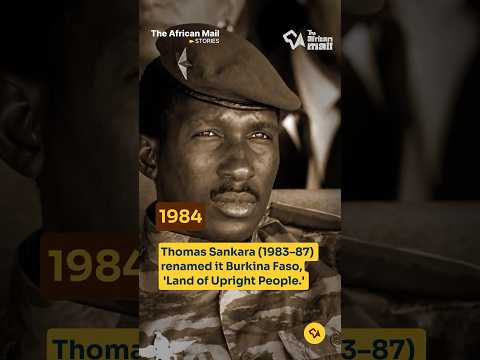
Short · Global
Burkina Faso: the Economy of War and Gold
History
Egypt: How Africa Lost Ownership of Its Greatest Civilization
Most Read
- NewsThe Scramble for the Sahel: Inside Africa's New Geopolitical War
- ProfilesAliko Dangote: Africa's Industrial Sovereign Who Built a $20 Billion Empire
- TechM-Pesa: the African Mobile Money Innovation That Changed Global Finance
- TechThe Palantir Blueprint: How Silicon Valley Is Rebuilding Africa's Security Empire