


Across much of Central and North Africa, the GMO debate looks very different from the arguments in Nairobi, Abuja or Pretoria. In the Congo Basin, a devastating cassava disease is moving west, yet countries such as the Democratic Republic of Congo have no working system that could even assess a disease-resistant genetically modified crop. In North Africa, Egypt adopted insect-resistant maize in 2008 and pulled it from its fields four years later, because the approval had never rested on a biosafety law.
These are the countries with no seat at the table. The question in most of them is not whether to say yes or no to a particular crop. It is whether there is any institution in place to ask.
Silent decay in the cassava belt
Cassava brown streak disease is unusually cruel because it hides until harvest. An infected plant can keep green, healthy-looking leaves while the root beneath it turns brown, dry and corky. A farmer can spend up to a year weeding and tending a field, only to dig up a crop that cannot be eaten.
The disease was long thought to be confined to the coastal lowlands of East Africa. Then, in November 2004, researchers confirmed its re-emergence at Mukono in central Uganda. From there it moved steadily through the Great Lakes region and into eastern Congo. In 2022 it was confirmed around Yangambi in Tshopo province, roughly 1,000 kilometres from the Ugandan border and deep inside central Africa.
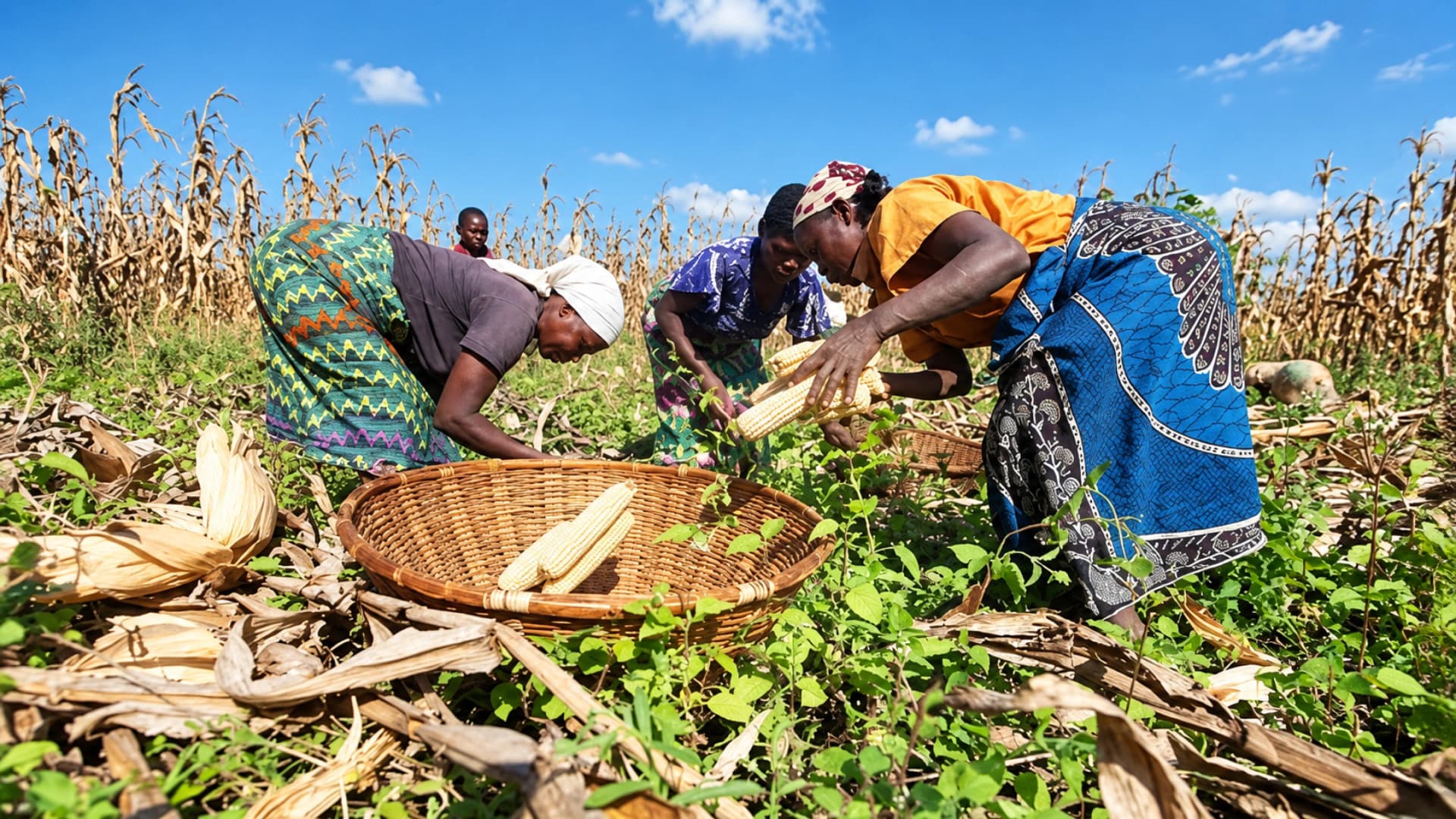
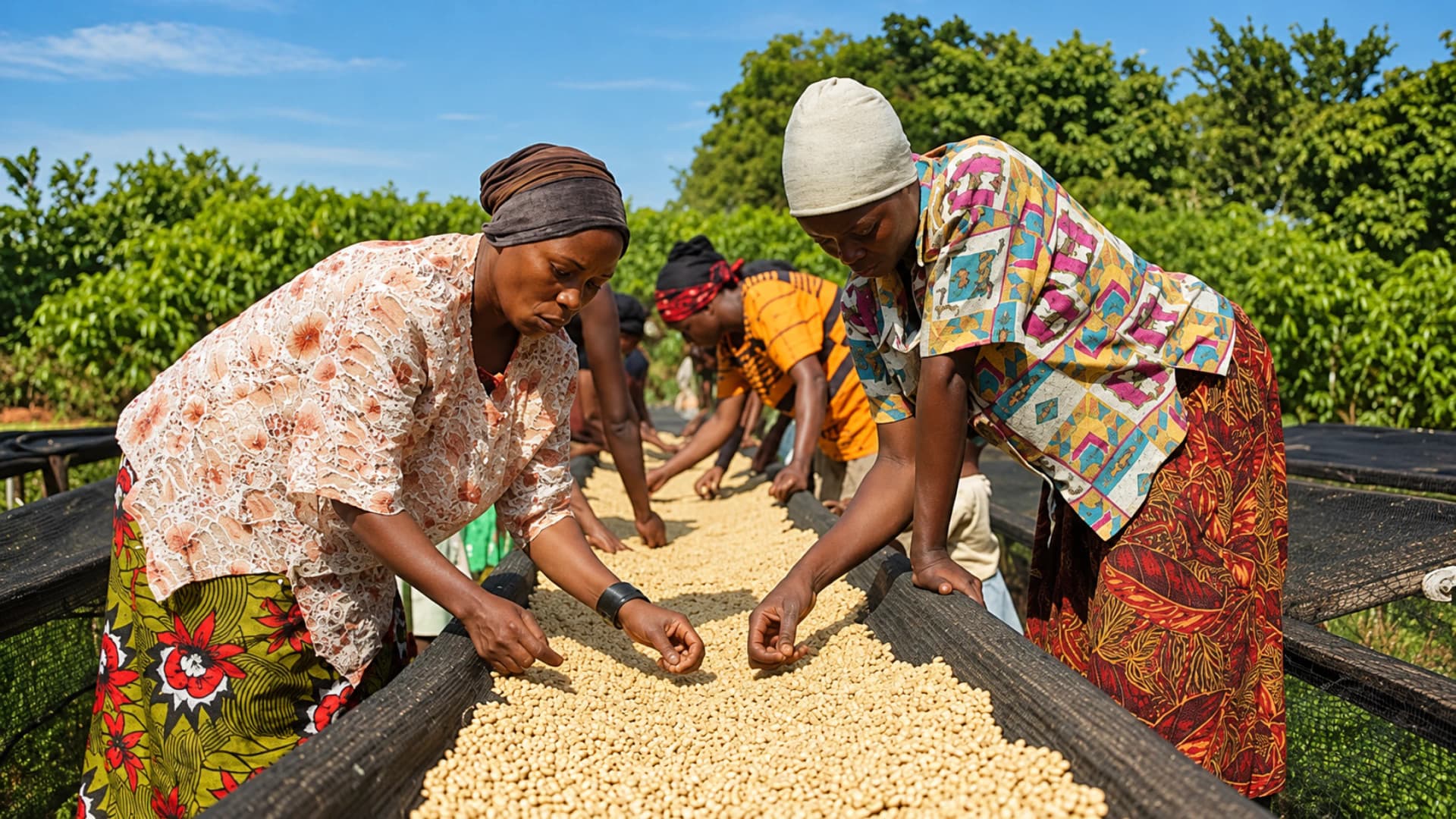
The speed of that spread comes from the way cassava is grown. It is not planted from seed bought in bags from an agro-dealer. Farmers cut stems from mature plants, bundle them and push them into the ground. When stems are shared between neighbours or carried along trade routes, the virus travels with them. Whiteflies spread the disease locally, but people carry it hundreds of kilometres.
That informal system sits outside any formal seed channel, which is why ordinary seed regulation does little to slow the disease. Epidemic modelling suggests the westward advance is far from over, with major cassava-growing regions still ahead of it.
Where there is no regulator
A genetically engineered answer already exists. Scientists at Kenya’s KALRO, Uganda’s National Crops Resources Research Institute and the Donald Danforth Plant Science Center developed a cassava resistant to the disease, known as event 4046. By January 2026, Kenya had completed national performance trials and the crop was awaiting commercialisation.
Move west into the Congo Basin and the institutional landscape changes completely. In the Democratic Republic of Congo, Cameroon, Congo-Brazzaville and the Central African Republic, cassava is the main food safety net. None of these countries has ever commercialised a genetically modified crop.
The reason is rarely a decision against the technology. It is the absence of the machinery needed to decide anything at all. A working biosafety system needs a law that defines how applications are made, a regulator able to assess the scientific evidence, laboratories that can test genetic material, inspectors in the field, a way for the public to be consulted and a channel for appeals.
Several Central African states are parties to the Cartagena Protocol on Biosafety, the international treaty on genetically modified organisms. Signing a treaty is not the same as building and funding the agency that applies it. In countries managing security crises and tight budgets, biosafety administration has rarely been a priority.
The effect is a barrier as complete as any ban. A developer has nowhere to submit an application, so nothing is evaluated, and no parliament or minister ever has to take a position.
A route that needs no biosafety law
Genetic modification is not the only way to fight cassava brown streak disease. Cassava originated in South America, and plant breeders have found natural resistance in lines from that native range. Screening of South American cassava held in international collections identified accessions that stayed free of the virus, and those lines have been shared with African breeding programmes.
Varieties bred conventionally from that material do not fall under biosafety rules, so they can move where GM cassava cannot. Researchers report that the resistant material is now being deployed in affected regions of East and Central Africa, where the durability of its resistance is being tested in farmers’ conditions.
Neither route solves the problem on its own. The hardest part of both is the stem. Clean, disease-free planting material has to be multiplied at scale, certified and transported across regions where good roads are scarce. Without that, better genetics, modified or not, never reach the smallholder farmers who need them.
Egypt went first, then stopped
North Africa presents a different picture. Egypt did not lack capacity. It built a serious agricultural biotechnology base from the early 1990s and set up national biosafety committees in 1995.
In 2008, the Ministry of Agriculture approved Ajeeb-YG for domestic planting. The insect-resistant maize was made by crossing Monsanto’s MON 810 trait into a local Egyptian variety called Ajeeb. It made Egypt the second African country after South Africa, and the first Arab country, to commercialise a GM crop.
In March 2012, a ministerial decree suspended the planting and commercialisation of Ajeeb-YG. The suspension was not triggered by evidence of harm to health or the environment. It followed a hostile media campaign, and the government cited the absence of a biosafety law governing the production and sale of such crops. The original approval had come by administrative decision, never by an act of parliament.
That gap has never been closed. A biosafety bill went to the cabinet in March 2017 but was not enacted, and domestic cultivation has remained frozen, along with Egyptian research on crops such as GM wheat, cotton and bananas. Policy has moved on imports instead: in January 2026, the National Food Safety Authority issued rules requiring traders in genetically modified foods to hold a licence, and giving the authority power to stop the import or circulation of GM products.
Egypt’s story is the clearest example on the continent of a country that had the science and lost the crop for want of a law.
Sudan’s quiet cotton
Sudan took the opposite path, and with far less controversy.
It began planting insect-resistant Bt cotton in 2012. By 2018 the crop covered about 243,000 hectares, and ISAAA estimated that some 150,000 smallholder farmers were growing it, with adoption among cotton growers close to universal. That made Sudan one of Africa’s largest growers of GM crops. The area has not grown since, held back by the political turmoil and war that followed.
Sudan fits a pattern seen across the continent. Cotton is a fibre crop, not a food, and it has repeatedly been the first GM crop a country accepts. Kenya, Malawi, Eswatini and Burkina Faso all began with Bt cotton before any food crop was considered.
Water, wheat and the limits of today’s traits
Elsewhere in North Africa, the door is firmly shut or was never opened. Algeria has banned the import, production and distribution of genetically engineered plant material by ministerial decree since 2000, with an exception only for research. Morocco and Tunisia have never commercialised a GM crop.
For the region’s governments, the pressing agricultural questions are about water and grain. Egypt feeds more than 100 million people from the Nile and is one of the world’s largest wheat importers. Its central challenges are water efficiency, soil salinity and the global price of bread wheat.
The GM traits on the market today were built mainly for insect resistance and herbicide tolerance. They do little for a country whose binding limits are water and its dependence on imported grain. That helps explain why, even where the science exists, the political case for adoption in North Africa has been weak.
What the blank map tells us
Maps of GM crops in Africa usually show the countries that have said yes and the countries that have said no. Large parts of Central and North Africa belong to neither group.
In the Congo Basin, there is often no regulator to receive an application, while a disease that destroys cassava roots keeps moving west. In Egypt, a crop that was approved and planted was withdrawn because the law beneath it was never passed. In Sudan, cotton spread quietly to well over a hundred thousand farmers. In Algeria, a decree closed the question decades ago.
The common thread is institutions. A country without a working biosafety system has not made a choice about genetic modification. It has simply been left without the means to make one, and its farmers live with the consequences either way.
For cassava growers in central Africa, the more urgent question may not be GM or conventional at all. It is whether clean planting material, of any kind, can be produced and moved fast enough to stay ahead of a disease that travels in a bundle of stems.







Comments
No comments yet. Be the first to share your thoughts.