


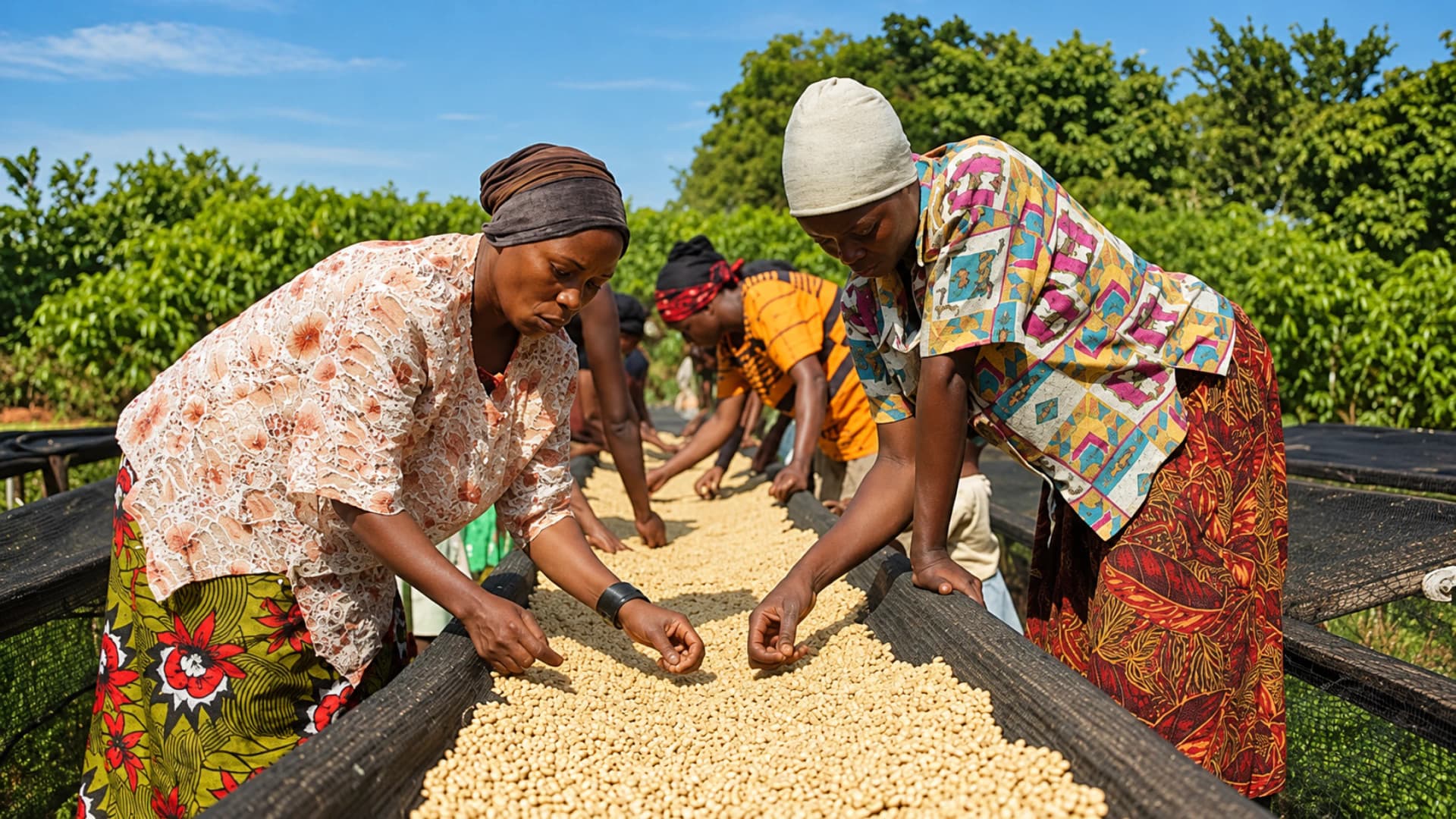
West Africa has taken the genetically modified crop debate into new territory. Nigeria commercialised genetically modified cowpea in 2019 and GM maize in 2024, putting food crops directly into a region where millions of people depend on them. Ghana followed with GM cowpea, while Burkina Faso reversed course on GM cotton after problems with fibre quality.
The West African experience shows why the GMO debate cannot be reduced to a question of whether a particular gene works. The bigger questions concern regulation, transparency, seed supply, farmer choice, intellectual property and whether agricultural systems are equipped to manage a technology over decades.
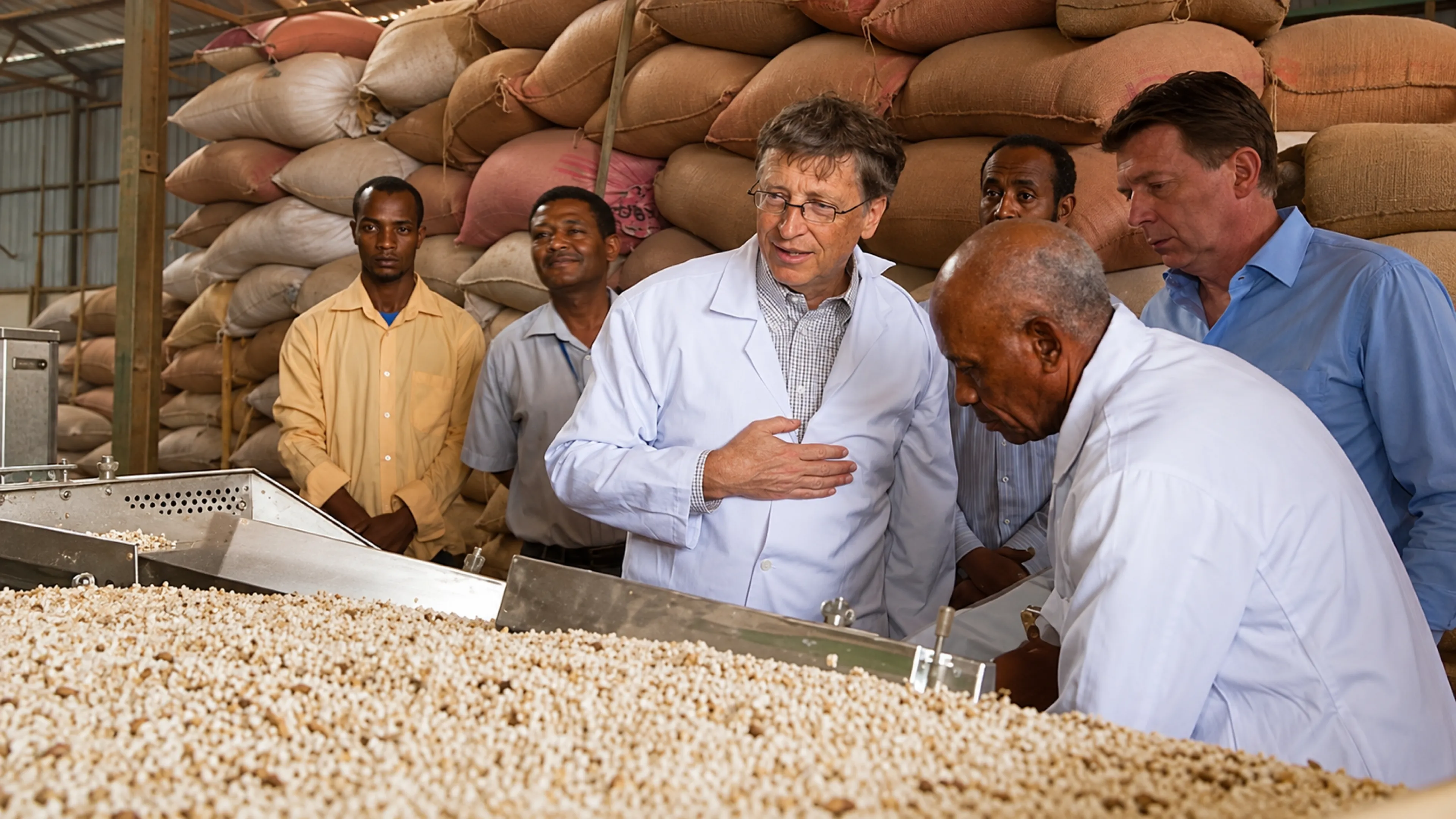
Nigeria’s experience is especially revealing. The country developed GM cowpea with substantial participation from Nigerian scientists, yet questions remain about how quickly the technology has reached farmers and how effectively the regulatory process has been communicated to the public.
Nigeria’s first GM food crops
On 11 January 2024, Nigeria approved four TELA maize varieties for commercial release: SAMMAZ 72T, 73T, 74T and 75T. The varieties were developed through the TELA programme, with breeding work carried out by scientists at the Institute for Agricultural Research at Ahmadu Bello University in Zaria.
The decision attracted immediate criticism from Nigerian civil society organisations. Health of Mother Earth Foundation and other groups argued that the approval process lacked sufficient transparency and questioned whether the relevant risk assessments had been made publicly available. In May 2024, the House of Representatives adopted a motion calling for an investigation into the introduction of GMOs and urging a suspension of new GMO introductions while the issue was examined.
The disagreement matters because TELA maize is a food crop. Nigeria had already crossed that line several years earlier with cowpea.
In 2019, the country approved SAMPEA 20-T, a genetically modified cowpea developed to resist the pod-boring insect Maruca vitrata. The variety became the first transgenic food crop commercialised in Africa outside South Africa. Nigerian researchers at Zaria played a central role in the breeding programme.
Cowpea is particularly significant in West Africa. It is an important source of protein and is consumed widely across the region. The pod borer can cause severe losses under heavy infestation, creating a practical reason for farmers to consider a crop that can reduce insect damage.
Why cowpea changed the conversation
The underlying technology is familiar. Bt crops contain genes derived from Bacillus thuringiensis, a soil bacterium that produces proteins toxic to certain insect larvae.
Farmers have used Bt-based biological insecticides for decades. With a Bt crop, the plant itself produces the relevant protein.
That distinction becomes politically important when the crop is cotton compared with a staple such as cowpea.
Cotton is sold as fibre. Cowpea is eaten directly by households. Once Nigeria introduced Bt cowpea, questions about agricultural biotechnology moved closer to consumers’ kitchens.
The development of SAMPEA 20-T was also unusual because the project was built through international collaboration while substantial breeding work took place in Nigeria. The programme involved organisations including the African Agricultural Technology Foundation, the Donald Danforth Plant Science Center, Australia’s CSIRO and Nigerian research institutions. The Bt gene was provided royalty-free by Monsanto, now part of Bayer.
The Nigerian story therefore cannot accurately be described simply as foreign technology being dropped into African agriculture. Nigerian scientists were involved in adapting the technology to local varieties and conditions.
That does not settle the wider questions about ownership or regulation.
A seed only matters if farmers can obtain it
One of the less glamorous problems surrounding agricultural biotechnology is also one of the most important: seed multiplication.
A regulatory approval does not automatically produce enough seed for farmers. Breeder seed has to be multiplied into foundation and certified seed. Companies have to produce it, distributors have to move it, and farmers have to be able to buy it.
When TELA maize was approved, the US Department of Agriculture reported that roughly 95 percent of Nigerian seed companies could not produce hybrid seed and expected domestic production of TELA planting seed to take time.
The early expansion of Bt cowpea faced a similar scaling challenge. More recent figures from AATF indicate that Nigeria’s certified PBR cowpea seed production increased sharply, from seven tonnes in 2021 to almost 1,305 tonnes by 2025, with the number of participating seed companies rising from 12 to 21.
That progression illustrates an important point about technology adoption. The question is not simply whether a variety has been approved. It is whether a functioning agricultural system can produce, distribute and support it at scale.
Farmers also need agronomic advice, access to finance and functioning markets. These factors can determine the value of a seed as much as the genetic trait itself.
The TELA maize argument
TELA maize combines drought tolerance with insect resistance. The technology is intended to address two major problems facing maize farmers: water stress and pests such as stem borers and fall armyworm. The Nigerian TELA programme reports substantial potential yield gains under appropriate conditions, although those figures come from organisations involved in promoting the technology and should be treated as such.
The case for the crop is straightforward. If farmers lose less maize to insects and drought, they can potentially harvest more from the same land while reducing some insecticide applications.
The case against it contains several different arguments, and they should be separated.
Some Nigerian campaigners have raised questions about the transparency of the regulatory process, access to risk assessments, labelling and corporate control over seed systems. Those are concrete governance questions. HOMEF has also made claims about health and environmental risks, including allegations linking GM crops to cancer and soil damage. Those claims are not supported by established evidence and should not be treated as fact.
The strongest criticism is therefore about process.
If a regulator approves a food crop, the public should be able to understand what was assessed, what evidence was considered and what conditions apply to the approval. Transparency matters regardless of whether the final decision is to approve or reject a technology.
Ghana chose the courtroom
Ghana’s experience offers a different institutional response.
The country approved Bt cowpea in 2022. Civil society organisations challenged the decision in court, beginning a lengthy legal dispute over the introduction of GM products.
In May 2024, Ghana’s Human Rights Court dismissed the case. The judgment rejected the applicants’ challenge to the commercialisation process, allowing the regulatory decision to stand. Ghana subsequently moved into cultivation, making it the latest country to begin growing a GM crop.
Nigeria and Ghana therefore provide an interesting institutional contrast. Nigeria’s GMO debate reached parliament and generated a call for an investigation. Ghana’s dispute went through the courts and produced a judicial decision.
Neither process removes the underlying questions about how citizens should participate in decisions over agricultural technologies.
Burkina Faso learned a different lesson
The history of GM cotton in Burkina Faso shows why agricultural biotechnology can produce unexpected economic outcomes.
Burkina Faso became a major adopter of Bt cotton. Farmers generally benefited from the technology’s ability to reduce pest damage and the need for insecticide applications. Adoption expanded rapidly after commercialisation in 2008.
The problem emerged elsewhere in the production chain.
Bt cotton varieties were associated with shorter fibre, or staple length. Fibre quality is commercially important because it affects what buyers are willing to pay. Research by Brian Dowd-Uribe and Matthew Schnurr found that farmers could remain satisfied with the crop because they were paid according to a fixed price structure, while the companies handling and marketing the cotton faced losses associated with reduced quality.
The technology was performing its intended pest-control function. The wider cotton system was dealing with a different problem.
Monsanto eventually paid compensation and Burkina Faso moved towards phasing out Bt cotton. By 2016, the country had abandoned the crop.
The episode is a reminder that agricultural traits exist within complicated production systems. A variety can solve one problem while creating another if breeding priorities, local characteristics and commercial requirements are not considered together.
Who owns the technology?
Ownership is another source of confusion.
Some of the technologies used in West Africa have been made available royalty-free. That means African research institutions and seed companies can access particular genetic technologies without paying a conventional royalty to the original technology owner.
It does not mean that the underlying technology becomes publicly owned.
In the Nigerian TELA programme, Bayer provides the relevant technology under royalty-free arrangements, while Nigerian seed companies can produce and commercialise the resulting hybrids under licence.
There is also a second distinction. Hybrid seed generally has to be purchased for each planting cycle because farmers cannot simply save seed from a hybrid harvest and expect the same characteristics in the next generation.
Consequently, the economic debate has several separate layers: who owns the genetic technology, who controls the seed company, who pays for seed each season and how much value remains with farmers and local institutions.
Treating all of those questions as one issue obscures more than it clarifies.
Mali asked farmers directly
Mali provides perhaps the most unusual example in the region.
In January 2006, 45 farmers from across the Sikasso region took part in a citizens’ jury examining GM crops and the future of farming. They heard evidence from specialist witnesses, questioned them and deliberated before making recommendations. The jury rejected the introduction of GM crops.
The process was unusual because farmers themselves were given a formal role in examining the technology.
It did not replace scientific regulation. It addressed a different question: who gets to participate in agricultural decisions that will affect farming communities?
That question remains relevant as West African countries consider new crops and new forms of biotechnology.
What the West African experiment tells us
The region’s experience does not produce one simple verdict on genetically modified agriculture.
Nigeria has developed domestic scientific expertise and introduced GM food crops. Ghana has taken a similar path through a judicially contested approval process. Burkina Faso adopted GM cotton and later abandoned it after commercial problems with fibre quality. Mali gave farmers a direct deliberative role before rejecting GM crops.
Across these cases, the recurring issues are broader than the genetic modification itself.
Farmers need access to seed, credit, extension services and markets. Regulators need scientific capacity and transparent procedures. Breeders need to protect locally valuable characteristics. Governments need systems for monitoring what happens after commercial release. Consumers need meaningful information about what they are buying.
West Africa’s most significant achievement may ultimately be the growth of its own scientific capacity. Nigerian researchers have been deeply involved in the development of GM cowpea and maize, building expertise that can extend beyond these particular crops.
The unresolved question is whether the region’s regulatory and agricultural institutions can develop at the same pace.
The debate over GM crops is often presented as a choice between technology and tradition, or between supporters and opponents. The history is more complicated.
Seeds enter systems. They interact with farmers, markets, pests, weather, laws and institutions. The consequences emerge over years.
That is why the most important question for West Africa may be less about whether a particular crop carries a modified gene and more about whether the countries adopting it have built the institutions capable of managing everything that comes afterwards.








Comments
No comments yet. Be the first to share your thoughts.